
Xanax Addiction Signs


Key Topics in Xanax Rehab
Xanax addiction signs may include rising tolerance, taking alprazolam more frequently or in higher doses than intended, and noticeable shifts in mood, judgment, or daily functioning. Because benzodiazepines like Xanax can lead to physical dependence, stopping suddenly can trigger withdrawal symptoms such as rebound anxiety, insomnia, tremors, and, in severe cases, seizures, which is why medical supervision is often recommended. Risk can increase with long-term use, higher doses, co-occurring mental health conditions, or mixing Xanax with other substances like alcohol or opioids. Treatment for Xanax addiction typically involves a medically guided taper and a structured treatment program that addresses both substance use and mental health needs.
-
AI OVERVIEW
Treatment for Xanax Addiction in Los Angeles
You’re not alone if you’ve noticed changes in yourself or a loved one, such as shifts in behavior, mood, or daily functioning that feel concerning. Identifying Xanax addiction signs early can make a meaningful difference in the path toward lasting well-being.
At Lost Angels, we offer a compassionate and structured environment where people can begin to address these challenges with professional support. Our approach emphasizes personalized care to help patients move beyond dependence with dignity and clarity.

What Are the Risks of Xanax Addiction and Dependence?
Xanax is a prescription benzodiazepine that can quickly transition from a helpful anxiety treatment to a potential substance abuse concern. Understanding the complex nature of Xanax use involves recognizing how this medication impacts the central nervous system and the potential for developing dependence.

How Physical Dependence Develops
Physical dependence on Xanax occurs through a gradual process of neurological adaptation. The body becomes accustomed to the medication’s calming effects, leading to increased tolerance and potential withdrawal symptoms when use is reduced or stopped. Even patients taking Xanax exactly as prescribed can experience these physiological changes.
Tolerance means that people may require increasingly higher doses to achieve the same therapeutic effect. This progression can create a challenging cycle where the original anxiety management becomes complicated by the body’s growing adaptation to the medication.
The transition from medical use to potential misuse can happen subtly, often without immediate recognition by the patient or their immediate support system.

Unique Risk Factors for Xanax Misuse
Certain factors can increase vulnerability to Xanax addiction and substance abuse. Personal or family history of substance use disorders, concurrent mental health challenges, and taking higher doses than prescribed can all contribute to increased risk.
The rapid onset and short-acting nature of Xanax create a unique pattern of use that can be particularly challenging. Quick relief followed by rapid wearing off can create a cycle of anxiety and temporary resolution that may push individuals toward more frequent or higher-dose use. This pattern can be especially pronounced for those managing underlying anxiety or depression.
Specific populations, including older adults and those taking other central nervous system depressants, face heightened risks of complications.
Are You Recognizing The Xanax Addiction Signs?
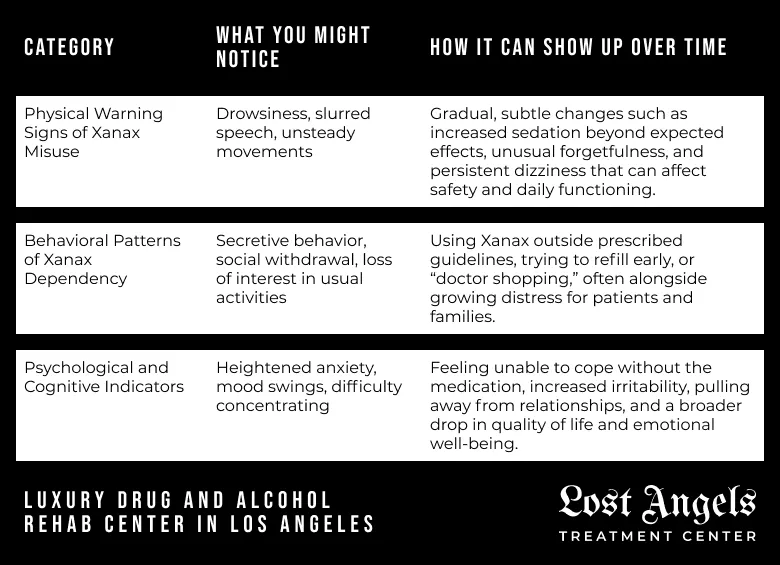
Drowsiness, slurred speech, and unsteady movements are key observable symptoms that could indicate developing dependency.
Physical manifestations often emerge gradually and can be subtle at first. Patients might experience increased sedation beyond normal medication effects, unusual forgetfulness, or persistent dizziness. These symptoms can significantly impact daily functioning and personal safety.
Behavioral shifts frequently accompany Xanax addiction and can be deeply distressing for patients and their families. Common signs include secretive behavior, withdrawing from social connections, and losing interest in previously enjoyed activities.
People might demonstrate concerning patterns like attempting to obtain early prescription refills, doctor shopping, or using Xanax outside prescribed guidelines. These behaviors often reflect underlying psychological struggles and increasing substance dependency.
Psychological symptoms of Xanax addiction can be particularly challenging and nuanced. Patients may experience heightened anxiety, significant mood swings, and difficulty concentrating or managing daily emotional responses.
Cognitive changes might include feeling unable to cope without medication, experiencing increased irritability, and pulling away from personal relationships. These psychological shifts can profoundly impact an individual’s quality of life and overall mental wellness.
Additional Health Risks of Xanax Abuse and Addiction

Recognizing Dangerous Overdose Indicators
Xanax overdose presents serious medical emergencies requiring immediate intervention. Critical warning signs include extreme lethargy, dangerously slowed breathing, loss of consciousness, and significant challenges in rousing an affected individual.
Mixing Xanax with other central nervous system depressants dramatically increases overdose risks. Alcohol, opioids, and additional sedatives can create life-threatening interactions that compromise respiratory and neurological functioning.
Emergency medical response becomes crucial when these symptoms manifest. Immediate professional assessment can prevent potentially fatal complications and provide essential medical stabilization.
Withdrawal and Professional Support
Attempting to discontinue Xanax independently can trigger severe, potentially life-threatening withdrawal symptoms. Professional medical supervision ensures safe, structured detoxification and comprehensive treatment planning.
Withdrawal experiences can include intense psychological and physiological challenges. That’s why medically monitored environments provide critical support, managing symptoms and reducing potential health risks associated with sudden medication cessation.

How Do We Assess and Diagnose Xanax Addiction?
A comprehensive assessment helps determine the complexity of Xanax use and identify potential co-occurring mental health challenges. Our team of medical experts conducts thorough evaluations to understand individual patterns of use, withdrawal risks, and underlying mental health conditions.
Our intake process begins with a confidential, non-judgmental interview designed to explore your specific substance use history and concerns. We use evidence-based screening tools, including DSM-5 criteria, to evaluate sedative use disorders and identify potential risks.
Our physicians carefully examine patterns of use, including increasing tolerance, difficulty reducing consumption, and impacts on daily functioning. We utilize multiple assessment methods, including detailed interviews, standardized questionnaires, and medical history reviews to develop a comprehensive understanding of your unique situation.
Xanax use frequently intersects with underlying mental health conditions like anxiety, depression, and trauma-related symptoms. Our dual diagnosis expertise allows us to simultaneously address substance use and mental health challenges.
Our integrated treatment approach screens for potential co-occurring conditions, recognizing that comprehensive care requires addressing both substance use and mental health simultaneously. This holistic assessment helps develop more effective, personalized treatment strategies.
By identifying interconnected mental health and substance use factors, we can create more targeted interventions that support long-term recovery and overall wellness.
Personalized Treatment Planning
Our small census of six residents enables highly personalized assessment and treatment planning. We offer multiple levels of care, from medically supervised detox to residential treatment options, ensuring comprehensive support throughout your recovery journey.
Our evidence-based therapies include:


Brainspotting
These are carefully selected to address the complex interactions between substance use and mental health. We develop individualized treatment plans that reflect your specific medical needs and personal goals.
How Can We Safely Treat Xanax Addiction?
Lost Angels Treatment Center recognizes that Xanax addiction requires comprehensive, medically supervised care due to the potential risks of withdrawal. Treatment approaches prioritize patient safety through evidence-based interventions that address both physical dependence and underlying behavioral patterns.
Comprehensive Treatment Approaches
Evidence-based therapies form the foundation of effective Xanax addiction treatment. Our program integrates multiple therapeutic modalities to address the complex nature of substance dependence.
Individual and group counseling provide critical support mechanisms for understanding addiction patterns. We utilize several modalities to help patients develop healthier coping strategies.
Moreover, holistic interventions complement medical treatments, incorporating mindfulness, yoga, and strength training to support overall wellness. These approaches help patients rebuild physical and emotional resilience during recovery.
Individualized Recovery Planning
Treatment duration varies based on individual needs, with tapering processes typically spanning several weeks. Our approach considers factors like usage history, co-occurring mental health conditions, and personal recovery goals.
We develop treatment plans that extend beyond initial stabilization. Relapse prevention strategies, anxiety management techniques, and ongoing support form critical components of our comprehensive care model.
Specialized Addiction Treatment Resources
Identifying qualified treatment providers requires careful consideration of medical expertise and comprehensive care capabilities. Our center offers specialized benzodiazepine addiction treatment with integrated mental health services.
We maintain rigorous medical standards through continuous staff training and evidence-based protocols. Our multidisciplinary team brings extensive experience in managing complex withdrawal scenarios and supporting sustainable recovery.
What Are the Costs and Next Steps for Xanax Addiction Treatment?
Lost Angels Treatment Center understands that navigating treatment costs and insurance can feel overwhelming during a challenging time. Our team is committed to helping you understand your coverage options and create a comprehensive treatment pathway.

Insurance and Financial Planning
Lost Angels accepts most PPO insurance plans and offers benefits verification to help clarify your coverage. Our admissions team can help you understand potential out-of-pocket costs, network requirements, and pre-authorization processes for clinically necessary treatment.
Insurance coverage varies widely, but many commercial plans provide support for medically necessary addiction treatment. Our team will work closely with you to review your specific plan details, documentation needs, and potential financial considerations.
Comprehensive Admission Preparation
Preparing for treatment involves gathering important medical information and planning practical logistics. Our team will guide you through collecting medication histories, treatment records, and essential medical documentation.
Practical preparation also includes considerations like work arrangements, transportation, and family communication. Lost Angels provides personalized support to help you navigate these important transition steps, ensuring a smooth and supportive admission process.
We understand that seeking treatment requires significant personal commitment, and we’re dedicated to making your initial steps as comfortable and clear as possible.

Licensed and Accredited Standards
Licensed by the California Department of Health Care Services (DHCS) in California (license or registration number 191512AP)
Accredited by The Joint Commission, reflecting formal oversight and standardized requirements for safety, quality, and clinical operations
Maintains a verified Psychology Today profile as an additional third-party reference point for prospective patients and families
Maintains a Better Business Bureau business profile as another third-party reference point for prospective patients and families

Let Lost Angels Help You Find Effective Treatment for Xanax Abuse Disorder
We know how overwhelming it can feel when Xanax use begins to take center stage in your life or someone you love. You’re not alone, and reaching out is a brave and important step toward healing. At Lost Angels, our team is here to walk beside you with compassion, offering personalized care that addresses both the physical and emotional sides of recovery.
We’re here to listen without judgment, answer your questions, and help you explore options that fit your unique situation.
References
- Addiction – Benzodiazepines Revisited—Will We Ever Learn?
- Innovations in Clinical Neuroscience – Doctor Shopping
- Drug and Alcohol Dependence – Xylazine Spreads Across The US: A Growing Component of The Increasingly Synthetic and Polysubstance Overdose Crisis
- Psychology Today – Lost Angels Treatment Center Profile
- Better Business Bureau – Lost Angels Profile
Frequently Asked Questions
What are the signs and symptoms of Xanax addiction?
Xanax addiction may present as mood swings, memory problems, excessive drowsiness, or secretive drug use. Physical dependence and withdrawal symptoms often make quitting difficult without professional support.
How can you tell if someone may need benzodiazepine addiction treatment?
Increased dosage, cravings, or continued use despite negative consequences indicate a need for treatment. Struggling to reduce use or experiencing withdrawal symptoms between doses are also key signs.
How is Xanax addiction treated in a clinical rehab setting?
Treatment typically begins with a medically supervised taper followed by therapy and support services. Lost Angels can provide personalized care to address both addiction and any co-occurring mental health conditions.
Does insurance cover Xanax addiction treatment?
Many insurance plans cover part or all of the costs for Xanax addiction treatment. Our team can help verify your benefits and explain your coverage options.
How long does benzodiazepine addiction treatment typically last?
Detox usually lasts days to weeks, while ongoing therapy and recovery support continue for several months. The duration depends on individual needs and progress.
Is professional treatment necessary for Xanax addiction recovery?
Professional treatment is strongly recommended due to the potential dangers of Xanax withdrawal. Our experienced team provides safe detox and evidence-based therapies to support recovery.