Alcohol Addiction Therapy: Types of Therapy for Alcoholism and Alcohol Use Disorder Treatment

Home Alcohol Addiction Therapy: Types of Therapy for Alcoholism and Alcohol...
logo-icon
Written by:

Lost Angels

logo
Clinically Reviewed by:
logo-calendar
Last Updated:
January 15, 2026

This page explains how alcohol addiction therapy fits into a full treatment plan: when you need medical detox first, which evidence-based therapies are used (CBT, MI/MET, DBT, ACT/mindfulness, Contingency Management), and how relapse prevention, group/family work, and trauma-informed care support long-term recovery. It also compares inpatient vs outpatient settings and describes how Lost Angels Treatment Center delivers individualized, dual-diagnosis care for alcohol use disorder with PPO insurance options.

Alcohol addiction therapy is one of the most important parts of alcohol addiction treatment because it addresses the patterns that keep addiction going: triggers, coping skills, thinking styles, emotional regulation, and relationship dynamics. For many people, alcohol misuse is closely tied to mental health, stress, trauma, or other health conditions, so therapy needs to be individualized, not generic.

If you are experiencing withdrawal symptoms, especially confusion, hallucinations, chest pain, seizures, or you feel your health and safety at risk, seek urgent medical care right away. Alcohol withdrawal can be medically serious.

    Alcohol Addiction Therapy vs Treatment for Alcohol Misuse

    Therapy is where real change happens. It focuses on structured conversations and skill-building that help you understand your relationship with alcohol, reduce risky behaviors, and build emotional stability. Therapy addresses the patterns behind alcohol use and supports healthier ways of coping.

    Treatment for alcohol misuse is broader. It may include medical evaluation, a structured treatment program, support services, and planning for next steps in recovery. Treatment looks at the full picture of your health and safety, not just drinking behaviors.

    A simple way to think about it is therapy focuses on why you drink and what happens before, during, and after alcohol use. Treatment focuses on creating a personalized comprehensive plan to address alcohol dependence safely and consistently especially when substance use overlaps with medical or mental health concerns.

    its-been-tough-challenging-day-shot-young-businesswoman-page
    young-woman-using-phone-while-sitting-sofa-home-page-1

    When withdrawal symptoms mean you need medical care first

    If there is any concern for alcohol withdrawal or severe alcohol withdrawal symptoms, therapy alone is not enough at the start. A qualified clinician can assess withdrawal risk and determine the safest approach. Learn what alcohol detox can involve and when it may be recommended on our Alcohol Detox page. Therapy becomes far more effective once you are medically stable and able to focus. 

    Brief intervention and alcohol counseling as a starting point

    A brief intervention can be appropriate when someone is early in a problem with alcohol or unsure whether change is necessary. It is structured, respectful, and focused on motivation and risk reduction. Alcohol counseling can also be a first step for people who are not ready for intensive care but want professional support, accountability, and clear next actions.

    senior-man-white-tshirt-talking-psychologist-mental-health-page
    doctor-escribiendo-informe-medico-page

    How a health care provider builds a treatment plan for substance use disorder

    A licensed health care provider or clinical team will typically start with a thorough assessment. This includes alcohol use history, safety risk, physical and mental health, and functional impact. The goal is a personalized alcohol treatment plan that matches the severity of the substance use, the risks, and the person’s life situation.

    People with substance use disorder often have overlapping stressors, trauma history, or a co-occurring diagnosis. Addressing addiction and mental health together is not optional. It is often the difference between short-term improvement and lasting addiction recovery.

    Behavioral health care matters because alcohol misuse is frequently linked to anxiety, depression, trauma responses, or another mental health condition. When alcohol and symptoms feed each other, treatment becomes more complex. This is where dual diagnosis and alcohol addiction care is essential: treating the substance pattern while also treating the underlying mental health issues.

    Some people enter care seeking abstinence. Others want to reduce alcohol as an initial goal while they build stability. A good plan is honest about risk, realistic about behavior change, and clear about what success looks like. Over time, many people move toward abstinence from alcohol because it becomes simpler, safer, and more sustainable.

    Cognitive Behavioral Therapy (CBT) for alcohol misuse and AUD

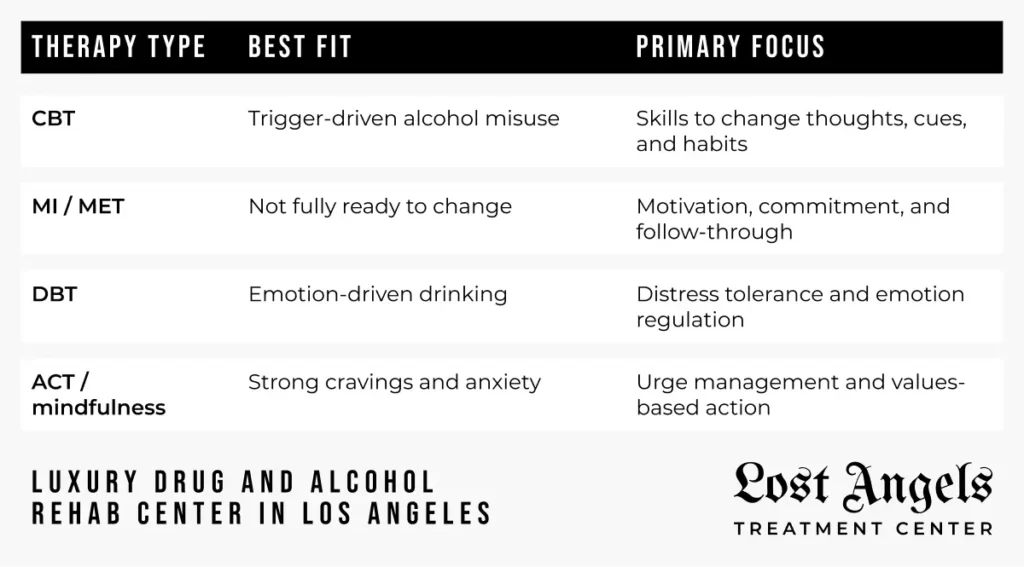
    Cognitive behavioral therapy is one of the most widely used and studied approaches for alcohol use disorder and substance abuse patterns. It focuses on the connection between thoughts, feelings, and actions, and it teaches practical ways to respond to cravings and high-risk situations. Many people searching for cbt for alcohol abuse are looking for exactly this: tools they can use in real life.

    CBT is not about willpower. It is a structured, skill-based approach that helps you interrupt routines, challenge unhelpful beliefs, and build healthier behavior patterns. This is a core behavioral therapies approach, and it is often a central part of alcoholism treatment.

    anxiety-bipolar-woman-with-mental-health-problem-focus-page

    CBT skills used for relapse prevention

    CBT commonly includes:

    iconoir_brain-electricity

    Identifying triggers and “automatic” thoughts that lead to alcohol use

    garden_gear-stroke-16

    Building alternative coping strategies for stress, shame, and social pressure

    mdi-light_alert

    Planning for high-risk moments to reduce the chance of relapse

    healthicons_refused-outline

    Problem-solving and refusal skills for alcohol and alcohol and drug exposure

    These tools support relapse prevention by making risky patterns predictable, and therefore manageable.

    psychologist-consulting-depressed-patient-page-1

    What CBT sessions typically look like in talk therapy

    CBT sessions are practical and structured. You and your therapist set goals, track patterns, and practice skills. Between sessions, there may be simple exercises, not busywork, but real-life practice that strengthens new habits.

    Motivational Interviewing (MI) and Motivational Enhancement Therapy (MET) for alcoholism

    Many people struggling with alcoholism feel conflicted. Part of them wants change, and another part wants relief right now. MI and MET are evidence-based approaches that work with that ambivalence respectfully. They help you clarify what matters, reduce self-deception, and move toward consistent action.

    This approach is often used early in treatment or alongside other behavioral therapies, especially when someone feels stuck, discouraged, or pressured by others.

    adult-woman-therapy-session-page

    When MI/MET is most useful

    MI/MET is especially useful when someone is:

    healthicons_alcohol-outline

    Unsure they have alcohol dependence

    iconoir_emoji-think-right

    Feeling overwhelmed by the idea of change

    material-symbols-light_change-circle-outline

    Cycling between “I’m fine” and “I’m not fine”

    mage_focus

    Trying to choose among treatment options and needs clarity

    It helps people seek treatment for the right reasons, with a plan they can sustain.

    depressed-young-black-lady-crying-consultation-with-european-page

    Dialectical Behavior Therapy (DBT) for alcohol addiction

    Dialectical behavior therapy is a skills-focused approach often used when alcohol use is driven by emotional intensity, impulsivity, or difficulty tolerating distress. Some people refer to this as dialectical behavioral therapy or simply dialectical behavioral skills. The goal is not to suppress emotion. The goal is to manage it without alcohol.

    DBT can be particularly relevant for people with a history of self-destructive coping, unstable relationships, or chronic stress that fuels addiction.

    Emotion regulation when alcohol is used to cope

    DBT skills often focus on:

    streamline-sharp_user-protection-1

    Distress tolerance without self-sabotage

    ci_slider-03

    Emotion regulation and impulse control

    arcticons_talking-points

    Communication and boundary setting

    streamline-flex_spiral-shape

    Reducing shame-driven spirals that lead to alcohol abuse

    Acceptance and Commitment Therapy (ACT) and mindfulness-based therapy for alcohol use disorder

    ACT and mindfulness-based approaches can be powerful for alcohol use disorder because cravings and urges are often driven by discomfort. ACT teaches a different strategy: stop fighting internal experiences and start building a life aligned with values.

    These approaches are not about “staying calm.” They are about building psychological flexibility, a key factor in long-term recovery and stable mental health.

    couple-forest-enjoying-spending-time-together-page

    Cravings, urges, and values-based change

    ACT may help you:

    quill_off

    Notice cravings without acting on them

    iconoir_walking

    Reduce avoidance behaviors tied to mental health stress

    mynaui_compass

    Reconnect with values like parenting, health, and integrity

    grommet-icons_task

    Stay consistent even when motivation fluctuates

    concept-love-with-no-limit-age-page

    Behavioral therapies: Contingency Management and skills-based therapy

    Contingency Management is a structured approach that reinforces positive behavior change. It is used in various forms across substance abuse treatment, including in combination with counseling and therapy. It works because it aligns treatment with how behavior change actually happens: repetition, reinforcement, and clear accountability.

    What contingency management can look like in a treatment program

    In a treatment program, Contingency Management might include measurable goals and consistent reinforcement for attendance, participation, or other recovery behaviors. It should be clinically supervised and integrated thoughtfully, not treated like a gimmick. When done well, it is designed to help people build momentum and reduce risky patterns related to alcohol and alcohol and drug use.

    sad-ptsd-woman-patient-uttermost-therapy-mental-health-page (1)
    backyard-page

    Relapse prevention and recovery planning

    Relapse is not a moral failure. It is a risk that can be planned for. Strong recovery plans reduce surprises, clarify what to do under pressure, and protect progress. The focus here is practical: identifying patterns, building buffers, and creating a response plan before you need it.

    Relapse-prevention-and-recovery-planning

    Triggers, high-risk situations, and a relapse prevention plan

    A strong plan often covers:

    • Personal triggers (stress, loneliness, conflict, fatigue)
    • Environmental triggers (certain people, places, routines)
    • Early warning signs and symptoms of alcohol misuse returning
    • A step-by-step response plan to prevent escalation into relapse
    portrait-person-suffering-from-depression-page

    Group therapy, 12-step facilitation therapy, and support groups

    Individual work matters, but recovery is hard in isolation. Group therapy offers perspective, accountability, and social learning. It also reduces shame, which is a major driver of addiction.

    Many people also benefit from peer-based communities. Support groups vary widely, including both 12-step and non-12-step formats. The point is consistent support, not ideological purity.

    hugeicons_user-group

    Group therapy for alcoholics: skills groups vs process groups

    Skills groups teach tools: coping strategies, emotional regulation, communication, and relapse planning. Process groups focus more on patterns, relationships, and insight. Many people do best with both.

    grommet-icons_steps

    12-step facilitation and non-12-step options

    12-step approaches are widely available and can be helpful for structure and community. 12-step facilitation therapy is a clinical method that introduces the framework and helps people engage with it in a grounded way. Non-12-step alternatives can also work, especially for people who prefer a different structure.

    lost-angels-therapy-man-woman-holding-hands-page

    Family therapy and couples work in alcoholism treatment

    Alcohol misuse affects more than the person drinking. It changes trust, stability, and emotional safety in the home. Family therapy helps families stop reinforcing harmful patterns and learn how to support recovery without enabling.

    Rebuilding trust without enabling

    This work often includes boundaries, communication agreements, and realistic expectations. It also helps loved ones respond effectively if the person returns to old patterns. If you’re trying to figure out next steps for a loved one, read our guide on how to commit someone to alcohol rehab.

    lost-angels-therapy-woman-sitting-couch-hand-out-someone-page

    Trauma-informed therapy when alcohol addiction overlaps with mental health concerns

    For many people, alcohol becomes a tool to numb anxiety, grief, or trauma-related distress. Trauma-informed therapy treats the person with care and avoids rushing into intense processing that could destabilize early recovery. It is not about digging for trauma. It is about safety, regulation, and stability.

    icon-park-outline_feelgood-one

    When trauma work should wait until stabilization

    Trauma-focused work is often more effective after the person has stable sleep, reduced crisis behaviors, and a consistent support structure. This protects both mental health and sobriety goals.

    entrance

    Where alcohol rehab therapy happens: inpatient treatment vs outpatient alcohol counseling

    The therapies above can be delivered in different settings. Inpatient treatment provides structure, distance from triggers, and a higher level of monitoring. Outpatient alcohol counseling offers flexibility but requires stronger day-to-day stability and support.

    This is about setting, not superiority. The right setting depends on safety, severity, support, and the presence of co-occurring mental health or medical health concerns.

    What changes between inpatient and outpatient settings

    In inpatient settings, therapy is typically more frequent and integrated into a full daily schedule. Outpatient care often relies on fewer weekly sessions and stronger self-management between appointments. In both cases, effective treatment comes from consistency and a plan that matches real life.

    lost-angels-yoga-pile-stones-sandy-beach-page
    living-room

    Ready to Take the Next Step With Lost Angels Treatment Center?

    If you are concerned that alcohol use is becoming alcoholism or alcohol use disorder, you do not need to figure this out alone. Lost Angels Treatment Center offers a discreet, high-touch environment where addiction and mental health are treated together, with individualized care and evidence-based behavioral therapies.

    Lost Angels is verified by Psychology Today and listed under California License 191512AP, and is also BBB Accredited with an A+ rating. 
    If you are ready to explore treatment options, our team can help you understand what level of care may fit your needs and what a personalized plan could look like. We accept most PPO insurance

    References

    Alcohol addiction therapy FAQs

    What type of therapy works best for alcohol addiction?

    There is no single best answer because people have different drivers of alcohol use. CBT is widely used for skill-building and triggers. MI/MET helps with motivation and commitment. DBT can be ideal when emotions and impulsivity drive drinking. Many people do best with a combination of approaches, especially when mental health plays a major role.

    Not automatically. Individual therapy is ideal for privacy, deep personal work, and individualized planning. Group therapy adds accountability, perspective, and practice in relationships. Many people who have alcohol problems benefit from both.

    Yes. Therapy can help someone understand patterns, reduce harm, clarify goals, and move from denial to honest planning. It can also support people who are experimenting with change and trying to learn what they need to stay consistent.

    For some people, yes, especially for motivation, skills training, and ongoing support. The biggest limit is safety: if someone has severe use patterns, unstable mental health, or risk of serious withdrawal, they may need in-person medical oversight first.

    It depends on severity, history, support, and co-occurring conditions. Many people start seeing meaningful change within weeks, but lasting change usually requires months of consistent work. If you are struggling with addiction or struggling with alcoholism, the timeline matters less than starting and staying engaged long enough to build stable habits.

    Scroll to Top