
Alcohol Detox Los Angeles


Key Topics in Alcohol Rehab
This page explains what alcohol detox in Los Angeles involves, when withdrawal becomes medically risky, and how to choose the safest level of care. You’ll learn what symptoms to watch for, what a typical withdrawal timeline can look like, and how medically supervised detox works at Lost Angels, including next-step options like residential treatment and IOP. If you’re unsure whether you need inpatient detox or a lower-intensity option, admissions can help you get a clear recommendation and verify PPO insurance coverage.
Lost Angels Treatment Center provides medically supervised alcohol detox in Los Angeles for adults who need safe, structured withdrawal care in a private, luxury setting.
Detox is available on-site and can be followed by residential treatment or step-down outpatient care, depending on what you clinically need.If you are in immediate danger, having thoughts of self-harm, or experiencing severe withdrawal symptoms such as seizures or hallucinations, this page is not an emergency service. Call 911 or go to the nearest emergency department.
If you are in immediate danger, experiencing seizures, hallucinations, severe confusion, chest pain, or you feel medically unsafe, call 911 or go to the nearest emergency department.
-
AI OVERVIEW - ALCOHOL DETOX PROCESS
Why Choose Lost Angels for Alcohol Detox in Los Angeles
Choosing where to detox is personal. Lost Angels offers discreet, medically supervised alcohol detoxification in Los Angeles with integrated mental health support, delivered in a private, residence-style setting built for comfort and confidentiality.
You can start with on-site medical detox in Los Angeles and step into residential treatment or structured outpatient care (IOP) as you stabilise. The program stays low-census with a high staff-to-client ratio, often around 3:1, so support remains responsive.
Lost Angels is a true luxury detox environment with private rooms and premium amenities designed to support rest and routine. Admissions is straightforward: a confidential assessment, insurance verification, and clear guidance on the safest next step.
The center is registered with the California Department of Health Care Services (License 191512AP, Exp. 06/30/2027) and LegitScript certified. If availability is limited, admissions can discuss alternatives across sister luxury facilities.


Do You Need Medically Supervised Alcohol Detox in Los Angeles?
Alcohol withdrawal is not something you should “tough out” if there’s any risk it could turn severe. Many people assume they can handle it, until symptoms escalate and they are forced into an emergency situation.
Medically supervised alcohol withdrawal treatment Los Angeles is especially important if you have experienced withdrawal symptoms before, if you have a history of seizures, hallucinations, or delirium tremens, if you drink heavily every day or have been drinking for a long time, or if you have co-occurring mental health symptoms such as anxiety, depression, trauma, or PTSD.
If you’re unsure, don’t guess. Safe alcohol detox programs Los Angeles start with a clinical assessment. If you’re trying to help a loved one who refuses treatment, read our guide on how to commit someone to alcohol rehab.
Meet the Clinical Team
Lost Angels is supported by a team of medical professionals and licensed clinicians focused on safe withdrawal management and next-step planning:




What Is Alcohol Detox?
Alcohol detoxification is the medical process of stabilising withdrawal while your body clears alcohol and your nervous system begins to regulate again. Detox is not rehab, and it is not the same as therapy.
A quality medical alcohol detox Los Angeles program does three things well. First, it assesses withdrawal risk and medical history. Second, it manages symptoms safely with appropriate monitoring and support. Third, it creates a plan for what happens after detox, because detox alone is rarely enough.
If you’re searching for alcohol rehab and detox Los Angeles, detox is typically the first step, followed by residential care or structured outpatient support. After detox, most people benefit from structured alcohol rehab in Los Angeles to address the drivers of relapse.

Alcohol Withdrawal Symptoms and Timeline
Alcohol withdrawal exists on a spectrum. Some people feel uncomfortable and anxious. Others develop symptoms that can become medically dangerous without monitoring. The difference is not willpower. It’s your risk profile, drinking history, and previous withdrawals.
Physical symptoms may include shaking, sweating, nausea, vomiting, headaches, loss of appetite, elevated heart rate, and poor sleep. Symptoms can fluctuate, and they often worsen when dehydration, poor nutrition, and anxiety stack up.
It is common to experience anxiety, agitation, irritability, low mood, restlessness, and strong cravings. Sleep disruption can intensify these symptoms, making people feel mentally unstable even when physical symptoms seem “tolerable.”
Withdrawal can begin within hours after the last drink and typically intensifies over the first few days. Many people report symptoms peaking between 24 and 72 hours, but the pattern varies. Your risk is higher if you have a long history of heavy drinking, have gone through withdrawal before, or have co-occurring mental health or medical conditions. That’s why a medical assessment matters. It determines whether you need inpatient alcohol detox or a lower-intensity option.
Get urgent medical help if you experience seizures, hallucinations, severe confusion, chest pain, high fever, or sudden worsening symptoms. Severe withdrawal can escalate quickly. If there is any doubt about safety, do not attempt detox at home.

Luxury Alcohol Detox: Facility and Comfort
Lost Angels is a luxury medical detox environment designed to reduce stress during withdrawal and help you stay engaged in care. Comfort is not a gimmick. It supports sleep, nutrition, routine, and emotional stability during a vulnerable period.
Amenities and environment include features such as a pool, gym, chef-prepared meals, recreation spaces, and high privacy. Private rooms are available.
This is a detox facility Los Angeles clients choose when they want medical care without the feel of an institution.








How Alcohol Detox Works at Lost Angels Treatment Center
Detox should feel predictable, structured, and medically grounded. You should always know what’s happening and why.
Your first step is a confidential assessment of withdrawal risk, medical history, mental health factors, and any additional substance use. This is what determines the safest detox approach for you.
Medical detox Los Angeles care includes monitoring and adjustments based on your symptoms. The goal is stabilization with as little risk and distress as clinically possible.
Support during detox may include symptom relief, sleep support, hydration and nutrition support, and a calm daily rhythm that reduces anxiety and cravings.
Detox is step one. Lost Angels builds a next-step plan so you leave with structure, not just motivation. Depending on your needs, you may transition into residential detox, inpatient treatment, IOP, or a tailored outpatient plan.

Medications and Supportive Care During Alcohol Detox
Alcohol withdrawal treatment Los Angeles may include medication support when clinically appropriate. The exact approach depends on your symptoms, risk profile, and medical history.
Supportive care matters too, especially hydration, nutrition, and sleep. This is one reason detox in Los Angeles is safer in a medical setting than attempting detox alone.
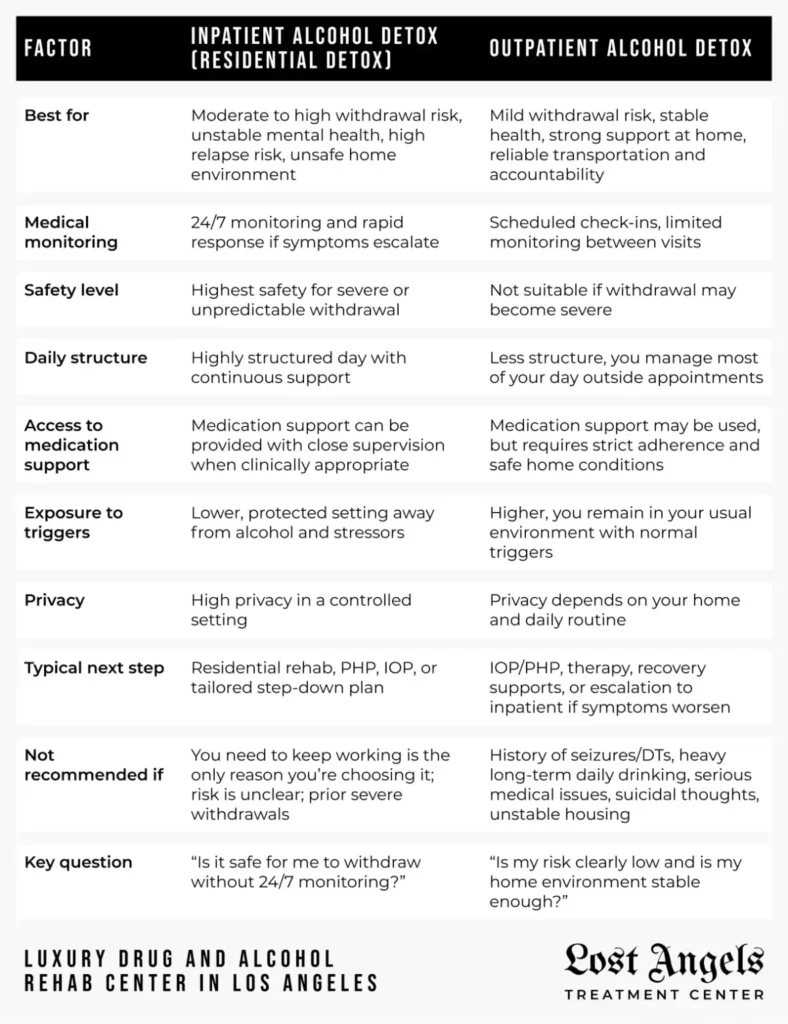
Inpatient vs Outpatient Alcohol Detox in Los Angeles
Choosing the right level of care is about safety, not convenience.
Inpatient alcohol detox LA is typically the better fit when withdrawal risk is moderate to high, when there is a history of severe withdrawal, when mental health is unstable, or when relapse risk is high in the home environment.
Outpatient detox may fit clearly low-risk cases with strong support and reliable monitoring. If there’s doubt, inpatient is usually the safer option. For a deeper breakdown of care levels after detox, see our comparison of inpatient vs outpatient alcohol rehab.


Alcohol Detox for Dual Diagnosis and Co-Occurring Disorders
Alcohol use often overlaps with anxiety, depression, trauma, or other mental health conditions. Withdrawal can intensify mental health symptoms, and untreated mental health issues can drive relapse after detox.
Lost Angels provides integrated support so substance detox and mental health care are addressed together, not treated as separate problems.
What Happens After Alcohol Detox?
Detox stabilises the body. Ongoing treatment is what reduces relapse risk and helps you rebuild healthier patterns.

Residential Rehab After Detox
For many people, residential treatment provides the structure, therapy, and accountability needed after detox, especially when relapse risk is high or the home environment is unstable.

Outpatient Step-Down Options (IOP)
If residential care isn’t the right fit, step-down options like IOP can provide structured support while you maintain work and family responsibilities.

Aftercare and Relapse Prevention Planning
Aftercare planning should be practical. It typically covers triggers, cravings, ongoing therapy, recovery support, and a clear plan for high-risk situations.
Luxury Alcohol Detox and PPO Insurance
Cost and insurance uncertainty stops people from taking the first step. Lost Angels accepts most PPO plans, but benefits must be verified.
Admissions can verify insurance benefits, explain coverage and likely costs where possible, and discuss treatment options based on your needs before admission.

What Our Patients Say About Us
 Posted on Google
 Dallas Cohrs
Trustindex verifies that the original source of the review is Google.
Good experience. Very comfortable and extremely accommodating to individual needs. Staff is friendly and helpful. Food is delicious. Small client-base allows for greater personalization of care.Posted on Google Renee JacksonMy experience with Lost Angels Treatment Center has been nothing short of meaningful. The staff goes beyond just doing their job, they genuinely invest in your progress. The support system and positive environment make all the difference. I’m deeply appreciative.Posted on Google
 Robert AmundsonLost Angels Treatment Center provides modern & holistic healing for those struggling with addiction & mental health in a safe and comfortable environment. I would recommend them to anyone looking to get help and take their life back!Posted on Google
 Anthony MendozaLost Angels Treatment Center is truly an incredible program. The staff genuinely cares, the support is real, and the environment makes a huge difference in recovery. Grateful for everything they do.Posted on Google
 Joe SmithI loved how much the staff cares for each client individuallyPosted on Google
 Anah LuvI have been to many centers but this one really changed my life. The therapy was good. And staff is really attentive food is a plus.Posted on Google
 Jenny not yoursChoosing this facility was by far the best decision for my brother in laws recovery. The facility itself is well maintained, clean and beautiful providing a comfortable environment that truly made him feel like it was a home away from home. He is now present in all he does and is happy with the outcome and we can not thank the staff/family enough for genuinely supporting us in the process from start to end and after care. We appreciate you God bless.Posted on Google
 brenna shaw100% RECOMMEND Lost Angels Treatment Center honestly saved my life. I don’t say that lightly. I came in broken, scared, and tired of living the way I was living, and they met me with real care, real love, and real support. The medical detox was not only safe and professional, but it was also extremely comfortable and luxurious. It didn’t feel cold or clinical. It felt peaceful, clean, and healing, which made such a huge difference during one of the hardest moments of my life. The counseling changed me. They didn’t just focus on my drugs and alcohol, they helped me understand myself, my pain, my patterns, and how to actually live differently. I felt heard. I felt respected. I felt like I mattered. For the first time in a long time, I had hope. What I loved most is that they truly care about the person, not just the addiction. The staff treated me with kindness, patience, and dignity every single day. It felt like a safe place to finally breathe and start over. If you’re looking for a place that combines real recovery, real healing, and a beautiful, comfortable environment, Lost Angels is it. They didn’t just help me get sober. They helped me start a new life. Personally want to thank Matt And Frank for becoming part of my recoveryPosted on Google
 Jay DankMy brother went here and it completely changed his life. Like full 180 he not even close to the same person and I can honestly say ive never been more proud of him, especially since he was someone I've always looked up to.Posted on Google
 Carly TuckerComfortable, Safe, and Empowering Recovery can be intimidating, but this facility creates an atmosphere of comfort and trust. My boyfriend felt completely at ease here, supported emotionally and practically every step of the way. The staff’s compassion and consistency made a huge impact on his experience in both detox and rehab. This is a place where people are truly set up for success. 10/10 I highly recommend ❤️🩹
Start Your Luxury Alcohol Detox Treatment
If you are ready to stop guessing and get a clear plan, start with a confidential conversation. Our admissions team will help you understand whether detox, inpatient treatment, or outpatient support is the right next step, and what your options look like based on availability and insurance.
You do not need to have the perfect words. Just reach out.

Licensed and registered: California Department of Health Care Services, License 191512AP (Exp. 06/30/2027).
LegitScript certified.
Address: 14257 Chandler Blvd, Sherman Oaks, CA 91401 (Los Angeles).
FAQs About Alcohol Detox in Los Angeles
How Long Does Alcohol Detox Take?
Detox length varies by severity, health history, and withdrawal risk. Many people stabilise within several days, but sleep, mood, and cravings can take longer to settle. Your timeline should be based on clinical progress, not a fixed schedule.
What Happens During Alcohol Detox Day to Day?
You can expect monitoring, symptom management, supportive care, and structured routines designed to stabilise you physically and mentally. Detox should include a plan for what happens next, not just “getting through it.”
What Are the Symptoms of Alcohol Withdrawal?
Symptoms may include tremors, sweating, nausea, insomnia, anxiety, agitation, and cravings. Some people experience severe symptoms that require urgent medical care.
When Is Alcohol Withdrawal Dangerous?
Withdrawal is dangerous when symptoms escalate into seizures, hallucinations, severe confusion, fever, or sudden instability. If you’re at risk, medically supervised detox is the safer option.
Can You Detox From Alcohol at Home?
In-home detox in Los Angeles can be risky because symptoms can turn severe quickly and there’s no 24/7 medical monitoring. If safety matters, a detox center Los Angeles patients trust is the smarter move.
What Medications Are Used for Alcohol Detox?
Medication support depends on your symptoms and clinical risk. The goal is to reduce withdrawal severity, support stabilisation, and prevent complications when appropriate.
Is Alcohol Detox Covered by Insurance in Los Angeles?
Lost Angels accepts most PPO insurance plans, and admissions can verify benefits. Coverage depends on your plan and medical necessity.
How Much Does Alcohol Detox Cost in Los Angeles?
Cost varies based on level of care, length of stay, and clinical needs. The fastest way to get clarity is to verify insurance first, then review private pay options if needed.
What Happens After Alcohol Detox Ends?
After detox, most people need ongoing care to reduce relapse risk. That may include residential treatment, IOP, therapy, and aftercare planning.
Can Alcohol Detox Help With Dual Diagnosis (Anxiety, Depression, Trauma)?
Detox stabilises withdrawal. Dual diagnosis care addresses the mental health drivers that often fuel relapse. Integrated treatment matters if mental health symptoms are part of the picture.