


Alcohol use disorder can be a challenging and overwhelming condition to face, both for the patient struggling with it and their loved ones. At the core of any effective treatment plan are two critical components: medical detoxification and comprehensive rehabilitation.
While these terms are often used interchangeably, they refer to distinct yet complementary phases of the recovery process. Understanding the key differences and how they work together is essential for anyone seeking to overcome an alcohol addiction.
What Exactly Is Medical Alcohol Detox?
Medical detox is the first crucial step in addressing alcohol dependence. Its sole purpose is to safely manage the acute physical symptoms that arise when someone stops drinking after prolonged, heavy use.
This is a necessary precursor to the deeper psychological and behavioral work of rehab.
What Is the Main Goal of a Detox Program?
The primary goal of a medical detox program is to stabilize the patient’s physical condition and prevent life-threatening complications from alcohol withdrawal.
Under 24/7 medical supervision, patients receive around-the-clock monitoring, medication management to ease withdrawal symptoms, and supportive care like IV fluids and nutritional support. The focus is entirely on the body, not on therapy or counseling.
How Long Does Alcohol Detox Usually Last?
Alcohol detox typically lasts between 5 to 10 days, though the exact duration can vary significantly depending on the individual’s level of physical dependence, overall health, and other medical factors.
Those with a long history of heavy drinking or a severe addiction may require a longer detox period to safely navigate the withdrawal process.
What Kind of Medical Support Is Provided During Detox?
During medical detox, patients receive a carefully tailored regimen of medications to manage withdrawal symptoms like tremors, seizures, anxiety, and insomnia. They are also closely monitored for signs of potentially life-threatening conditions like Delirium Tremens (DTs).
Hydration, nutrition, and 24/7 nursing care are provided to support the body’s healing. The goal is to stabilize the person’s physical state so they can safely transition to the next phase of comprehensive treatment.
What Does Alcohol Rehab Involve?
Once the physical detoxification process is complete, the real work of recovery begins in a residential rehabilitation (rehab) program.
While detox addresses the immediate physical needs, alcohol rehab focuses on the deeper psychological and behavioral aspects of addiction. This is where patients begin to explore the root causes of their alcohol use and develop the skills and coping strategies necessary for lifelong sobriety.
How Is Rehab’s Focus Different from Detox’s?
Detox is solely concerned with medical stabilization. However, rehab takes a more holistic approach, addressing the mental, emotional, and social factors underlying an individual’s substance use disorder. The duration in itself is a big difference as a standard rehab program can last 28-90 days.
The emphasis shifts from managing physical withdrawal to engaging in intensive therapy, counseling, and educational programming designed to promote long-term behavioral change.
What Happens During a Typical Day in Rehab?
A day in a professional residential rehab is highly structured, with a variety of therapies and activities intended to foster healing and recovery. Patients may participate in individual counseling sessions, group therapy, educational workshops on addiction and relapse prevention, and wellness activities like yoga or meditation.
The goal is to provide a safe, supportive environment that allows residents to focus entirely on their recovery journey.
What Are the Different Levels of Rehab Care?
Alcohol rehab programs exist on a spectrum of care, each serving a different level of clinical need. Inpatient or residential treatment offers the most intensive level of support, with patients living on-site 24/7.
Partial hospitalization programs (PHPs) provide a similar level of clinical care but with the option to return home in the evenings. Intensive outpatient programs (IOPs) offer a step-down from residential treatment, allowing patients to live independently while still receiving several hours of therapy per week.
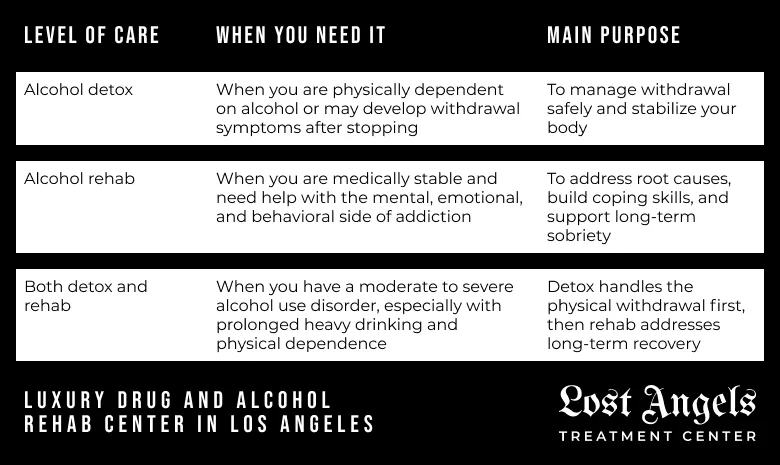
How Do I Know if I Need Detox, Rehab, or Both?
The decision of whether to pursue detox, rehab, or a combination of the two depends on the severity of the individual’s alcohol use disorder and their specific needs. For many, addressing both the physical and psychological components of addiction is the most effective path forward.
Who Typically Needs Both Detox and Rehab?
Those with a moderate to severe alcohol use disorder will generally require both medical detox and comprehensive rehabilitation.
The prolonged, heavy use of alcohol leads to physical dependence, making the detox process medically necessary to prevent life-threatening withdrawal symptoms. Once the body is stabilized, the patient can then focus on the deeper work of rehab to address the underlying drivers of their addiction.
Can Someone Go Straight to Rehab and Skip Detox?
In some cases, individuals who are not physically dependent on alcohol may be able to go directly to a rehab program without first requiring detox. However, this is fairly uncommon, as the majority of those struggling with alcohol addiction have developed a physical dependence.
A medical assessment is always required to determine if detox is necessary before entering a rehab program.
Is It Ever an Option to Only Do Detox?
Rarely, a patient may only require the detox phase if their alcohol use has been relatively limited, and they have not developed a severe physical dependence. However, detox alone does not address the psychological aspects of addiction.
Without the follow-up rehabilitation work, the risk of immediate relapse is extremely high. Detox is better viewed as the necessary first step, not a standalone solution.
What Are the Medical Risks of Skipping Professional Detox?
Attempting to quit drinking alcohol without medical supervision can be extremely dangerous, even life-threatening. The risks associated with unmanaged alcohol withdrawal should never be underestimated.
Can Alcohol Withdrawal Be Fatal?
Alcohol withdrawal can be fatal if not properly treated. Conditions like Delirium Tremens (DTs)—characterized by hallucinations, agitation, and seizures—as well as severe cardiovascular complications can arise and prove fatal without immediate medical intervention.
What Other Health Complications Can Occur?
Beyond the risk of seizures and cardiovascular events, unmanaged alcohol withdrawal can also lead to other serious complications, such as severe dehydration, malnutrition, and even aspiration pneumonia.
These ancillary issues can further compromise an individual’s health and well-being if not addressed promptly by medical professionals.
Why Is the Detox-Then-Rehab Sequence So Important?
The standard recommended path of care—detox followed by comprehensive rehabilitation—is considered the most effective approach for treating alcohol use disorder. There are important reasons why this sequence is crucial for achieving long-term sobriety.
How Does Physical Stability Enable Psychological Work?
Attempting to engage in meaningful therapy and behavioral change while still experiencing the acute physical symptoms of alcohol withdrawal would be extremely difficult, if not impossible.
By first stabilizing the body through detox, the patient can then focus their full attention and energy on the psychological and emotional work of rehab, setting them up for the best chance at long-term recovery.
Does This Sequence Improve Long-Term Recovery Outcomes?
Research has consistently shown that individuals who follow the detox-then-rehab model demonstrate higher rates of treatment completion and long-term sobriety compared to those who skip or abbreviate the process.
Therefore, addressing both the physical and psychological components of addiction in the proper order provides the most comprehensive and effective foundation for sustainable recovery.
What Happens After Completing Detox and Rehab?
After completing the initial detox and rehab phases, patients will enter the crucial aftercare stage, which helps support their continued wellness and prevent relapse.
What Is an Aftercare Plan?
An aftercare plan typically includes a combination of ongoing therapeutic support, such as outpatient counseling or support group participation, as well as practical measures like sober living arrangements, job assistance, and alumni program involvement.
The goal is to provide a structured, supportive environment as the person transitions back into daily life.
Why Is Continuing Care Essential for Preventing Relapse?
Addiction is a chronic, relapsing condition, and the risk of returning to old patterns of drinking remains high, especially in the early stages of recovery.
Continuing care after the initial treatment phases helps individuals develop the coping skills, support systems, and lifestyle changes necessary to maintain their sobriety over the long term. This ongoing support is not an optional add-on but a crucial component of the recovery process.
Get Professional Help for Substance Abuse at Lost Angels
At Lost Angels, we believe the question “do I need alcohol detox or rehab” is really a question about what kind of support will make recovery safer and more realistic. When physical dependence is present, detox is often the first need, but lasting change usually asks for more than stabilization alone.
That is where the next phase becomes just as important. Reach out to our team for guidance on whether medical detox, rehab, or a fuller substance abuse treatment plan may fit your needs.
References
- Carlson, R. W., Girgla, N., Davis, J., Moradi, A., & Cooper, T. (2022). Pneumonia is a common and early complication of the Severe Alcohol Withdrawal Syndrome (SAWS). Heart & Lung, 55, 42-48. https://doi.org/10.1016/j.hrtlng.2022.04.001
- Timko, C., Below, M., Schultz, N. R., Brief, D., & Cucciare, M. A. (2015). Patient and program factors that bridge the detoxification-treatment gap: a structured evidence review. Journal of Substance Abuse Treatment, 52, 31-39. https://doi.org/10.1016/j.jsat.2014.11.009
Frequently Asked Questions
What Is The Main Difference Between Alcohol Detox And Rehab?
Alcohol detox manages the physical drug withdrawal symptoms after your last drink, while rehab treatment addresses the psychological causes of substance abuse. This sequence ensures you are physically stable before starting intensive alcohol treatment.
How Do I Know If I Need A Medically Supervised Detox?
If you experience alcohol withdrawal symptoms like tremors or anxiety when you stop drinking alcohol, you likely need medical help. A medically supervised detox provides 24/7 oversight at treatment facilities to prevent life-threatening complications.
Can I Skip Detox And Go Directly To An Inpatient Rehab?
Most people with alcohol dependence must complete the alcohol detox process before entering inpatient rehab. A medical professional will assess your drug and alcohol history to know if you need stabilization first.
Is It Safe To Try An At-Home Alcohol Detox?
No, trying to detox alone is dangerous because drug and alcohol addiction creates a high risk for seizures and Delirium Tremens. You should get professional help to safely detox under the care of a professional rehab center.
What Are The Medical Risks Of Unmanaged Drug Withdrawal?
Severe alcohol withdrawal symptoms typically peak 48 to 72 hours after your last drink and may lead to serious cardiovascular events. Without professional help, these symptoms can be fatal, making it essential to reach out for help early.
How Long Does A Standard Addiction Treatment Program Last?
While the alcohol detox process takes 5 to 10 days, a comprehensive rehab program usually lasts between 30 and 90 days. The total duration of alcohol recovery depends on the severity of addiction and individual clinical needs.
What Kind Of Therapies Are Included In A Rehab Facility?
A rehab facility provides a variety of treatment options, including individual counseling, group therapy, and mental health services. These different types of treatment help you develop coping skills for long-term alcohol recovery.
Do Treatment Facilities Address Co-Occurring Mental Health Disorders?
Yes, many alcohol rehab centers specialize in treating addiction and co-occurring conditions like depression or anxiety. Addressing co-occurring mental health disorders simultaneously is a vital step toward recovery.
Why Is The Detox-Then-Rehab Sequence Considered The Best Help For Alcohol?
Physical stability from a medically managed detox allows you to focus fully on the behavioral work required during rehab treatment. This combined approach is the most effective way to help people stop the cycle of abuse and addiction.
How Can I Help Someone I Love Get Help For Alcohol?
If someone you love is struggling, you can reach out for help to find local treatment facilities that offer a full continuum of care. Compassionate intervention is often the first step toward recovery for those battling drug or alcohol issues.