
Prescription Drug Detox in Los Angeles

Lost Angels

Key Topics in Prescription Drug Addiction Treatment
Lost Angels is a treatment center in Los Angeles offering medically supervised prescription drug detox with 24/7 clinical oversight, dual diagnosis treatment support, and a personalized treatment plan that stabilizes patients and prepares them for ongoing care.
Detox and residential services use structured withdrawal management, symptom monitoring, and medication support when indicated, with treatment options that prioritize safety, comfort, and a clear transition into a rehab program.
- After detox, patients step into drug rehab levels of care such as residential treatment, intensive outpatient treatment, or sober living, with holistic treatment elements and therapy focused on maintaining stability and supporting long-term recovery.
-
AI OVERVIEW
The grip of prescription drug dependence can feel overwhelming, especially when daily life begins to unravel. Seeking help is a courageous first step toward reclaiming control and beginning the journey to lasting wellness.
At Lost Angels, we provide a compassionate and structured environment for those facing the challenges of prescription drug detox in Los Angeles. Our approach integrates medical expertise with personalized care to support each individual’s unique path to recovery.

Why Is Medical Detox Necessary for Prescription Drug Addiction?
Medical detox is necessary because stopping certain prescription medications can trigger severe, uncomfortable, and potentially dangerous withdrawal symptoms that are difficult to manage alone.

Certain Medications Pose Significant Withdrawal Risks
Physical dependence can develop even when a medication is taken exactly as prescribed by a doctor. Over time, the body adapts to the presence of the drug, and its absence can cause a significant physical and psychological response. The prescription medications that most often require a structured medical detox include opioid pain relievers, benzodiazepines, stimulants, and sedative-hypnotics.
These categories include well-known medications such as oxycodone and fentanyl (opioids); Xanax and Valium (benzodiazepines); and Adderall and Ritalin (stimulants). Even sleep aids like zolpidem can lead to dependence and difficult withdrawal. Recognizing that a substance intended for healing now requires a plan for safe discontinuation is a critical step toward recovery.
Attempting to stop these substances without clinical support can lead to severe health complications, including elevated heart rate, respiratory issues, or seizures.
Recognizing the Signs of Physical Dependence
The need for a professional detox program often becomes clear when you experience withdrawal symptoms after missing a dose or reducing your intake. These signs can include heightened anxiety, shaking, nausea, insomnia, or intense cravings for the medication. These physical and emotional responses are indicators that your body has become dependent on the substance to function normally.
Other signs may be behavioral, such as finding you need more of the medication to achieve the same effect, a phenomenon known as tolerance. You may also recognize a need for support if you have tried to stop on your own but were unable to, have used prescriptions not written for you, or have mixed medications with other substances like alcohol.
These challenges are often complicated by co-occurring mental health conditions or chronic pain, which can make stopping feel impossible.

What Can I Expect During Medically Supervised Detox?
Medically supervised detox at our center provides a safe, comfortable, and clinically monitored environment to manage withdrawal symptoms as your body stabilizes. Our process begins with a comprehensive assessment to create a personalized care plan, followed by 24/7 support from our medical team to ensure your physical and emotional well-being. This foundational step prepares you for the next phase of your addiction treatment program.
Before your detox begins, our medical team conducts a thorough evaluation to understand your complete health profile. This includes a review of your substance use history, medical background, current medications, and any co-occurring mental health conditions. This initial step is essential for developing a safe and effective substance abuse treatment plan tailored specifically to you.
This detailed assessment allows us to create a highly personalized care protocol that accounts for your unique physiology and circumstances. We consider your metabolism, the specific substances used, and any past experiences with withdrawal to inform our approach.
Throughout the detox process, you will receive around-the-clock medical supervision and compassionate care. Our team is always present to monitor vital signs, track your progress, and respond immediately to any emerging needs. This constant medical oversight is especially critical for managing withdrawal from substances that can present serious health risks.
Our small, six-patient capacity ensures you receive exceptionally attentive and personalized care in a private, healing environment. This level of support helps reduce the anxiety and distress that can accompany withdrawal, allowing you to rest in a comfortable, ensuite room.
Withdrawal from a substance use disorder can be physically and emotionally challenging, with symptoms ranging from body aches and nausea to anxiety and sleep disturbances. Our primary goal is to minimize this discomfort and help you feel as stable as possible. We use evidence-based treatment protocols to manage your symptoms effectively and compassionately.
To ease the challenges of withdrawal, our medical team may provide targeted medications to alleviate specific symptoms. We may also utilize Medication-Assisted Treatment (MAT) to support a safer and more gradual transition. These interventions are designed to prevent complications and provide a more comfortable detox experience.
How Does a Detox Program Support Safe Withdrawal?
A medically supervised detox program supports safe withdrawal by using evidence-based medications and therapeutic care to manage symptoms and ensure physical stability.

Medication Protocols for Specific Substances
The medication protocols used during drug detox are tailored to your specific health needs, the substances used, and the severity of dependence. The primary goal is to ensure your safety and comfort throughout the detox process. Our medical team provides continuous monitoring of vital signs and can make medication adjustments as needed to mitigate discomfort and prevent complications.
For an opioid or prescription drug detox, medications such as buprenorphine may be used to ease withdrawal symptoms and reduce cravings. When detoxing from benzodiazepines, a carefully managed taper with a longer-acting medication is often used to minimize the risk of serious reactions. This individualized treatment plan is designed to help you safely detox under constant clinical supervision.
Providing Therapeutic Support During Detox
The detox process addresses more than just physical symptoms; it also includes support for your mental and emotional well-being. Our dual diagnosis program is equipped to manage co-occurring mental health conditions from the very beginning of your stay. This early therapeutic support helps you feel more grounded and prepared for the deeper work ahead in inpatient rehab.
During detox, you may participate in brief individual counseling sessions using evidence-based modalities like cognitive behavioral therapy (CBT) or motivational interviewing. To complement medical care, we integrate holistic practices such as mindfulness and meditation to help calm the nervous system.

How Do I Know Which Detox Setting Is Right for Me?
The right detox setting is determined by your specific medical history, the substances used, and any co-occurring mental health conditions you may be experiencing.
Your Safety Guides Our Treatment Recommendations
Medically supervised detox is often recommended for patients who have:
Developed a physical dependence on a substance
Experienced difficult withdrawal symptoms in the past
Been using multiple substances
A history of seizures or underlying medical conditions like cardiac or respiratory issues

Inpatient Detox Provides Comprehensive Professional Support
Residential or inpatient detox provides around-the-clock medical care and emotional support within a structured and secure facility in Los Angeles.
Moreover, our center meets high clinical and safety standards. In California, addiction treatment facilities must be licensed by the Department of Health Care Services (DHCS, license 191512AP). Our rehab center is fully licensed by the DHCS, ensuring our detox protocols and facility operations meet or exceed state mandates.
Beyond state licensing, our program is accredited by The Joint Commission, reflecting our dedication to continuous improvement and high-quality care. We also maintain a verified Psychology Today profile and a Better Business Bureau business profile, which provide additional third-party reference points for prospective patients and families.
What Does Long-Term Recovery Support Involve at Lost Angels?
Long-term recovery support involves a seamless transition from detox into continued clinical care, with clear planning for insurance, costs, and therapeutic programming.

We Help You Navigate Insurance and Payment
Lost Angels accepts most PPO insurance plans, and our admissions team can perform a complimentary benefits verification to clarify your coverage. This concierge-style service allows you to focus on preparing for your stay at our recovery center in Los Angeles.

A Structured Transition to Ongoing Care Is Planned From Day One
Detox is the first step in stabilizing the body, but lasting recovery requires addressing the psychological aspects of substance use. Your individualized treatment plan maps out the appropriate next steps for your unique situation. This gradual transition helps you integrate recovery skills into daily life while receiving consistent support from our team.

Aftercare Planning Includes Robust Therapeutic Support
A core component of your treatment at Lost Angels is developing a comprehensive relapse prevention strategy. In individual and group therapy, you will learn to identify personal triggers and practice healthy coping mechanisms using evidence-based frameworks. Staying connected to a supportive community is essential for maintaining stability and building a fulfilling life free from addiction.

What Happens After Detox in Los Angeles
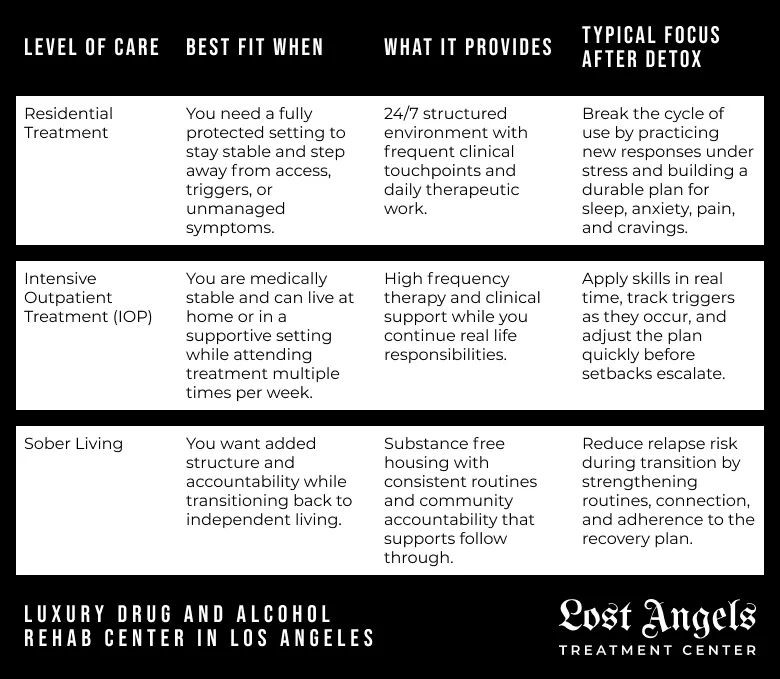
Detox helps your body stabilize, but it does not address the patterns that kept prescription drug use in place. The next phase of care focuses on rebuilding structure, restoring decision making under stress, and practicing skills long enough to hold up outside a protected setting. After detox, the best fit often depends on how steady you feel day to day, what triggers you are returning to, and how much support you need while your brain and body continue to recalibrate.
Residential Treatment
Residential treatment provides a fully contained environment where the work shifts from withdrawal management to changing the drivers of use. Days are intentionally structured so therapy is not an isolated appointment, but something you return to repeatedly through individual sessions, groups, and medical check ins that track what is changing and what is not. This level of care gives you space to step away from the daily cues that can restart the cycle quickly, such as access to medication, high pressure routines, or unmanaged anxiety and insomnia.
Because prescription drug dependence often involves both physical conditioning and emotional reinforcement, residential care emphasizes repetition and feedback. You practice coping strategies while you are tired, irritated, craving, or emotionally activated, and you build a plan for what you will do in the moments that previously led back to a pill.


Intensive Outpatient Treatment
Intensive outpatient treatment is designed for people who are medically stable after detox and ready to rehearse recovery in real life while still staying closely connected to care. You return for multiple sessions each week, which creates enough frequency to keep progress moving, while allowing you to maintain responsibilities like work or family. The advantage is that challenges show up immediately, and treatment can respond to what is actually happening rather than what you fear might happen.
This level of care focuses on translating insight into execution. Sessions help you map high-risk situations, build refusal and boundary skills, and develop routines that protect sleep, mood, and follow-through. If stress, cravings, or mental health symptoms spike, treatment is adjusted with more support rather than waiting for a crisis. The aim is to strengthen stability while you are living your life, not after you return to it.
Sober Living
Sober living offers a structured, substance-free place to live while you rebuild daily routines and accountability after prescription drug detox. It is not a treatment by itself, but it can reduce friction during the most vulnerable transition, when you may feel physically better but still have unpredictable sleep, mood swings, or cravings. A stable environment matters because prescription drug relapse often happens quietly, through access, isolation, or a return to old coping habits rather than a single obvious event.
This setting supports consistency. Shared expectations, predictable rhythms, and community accountability can make it easier to stick to appointments, stay connected to support, and follow a plan when motivation dips. Sober living can also help you practice normal responsibilities step by step, with enough structure to catch drift early, before it turns into reuse.

How Do Evidence-Based Therapies Support Prescription Drug Addiction?
In our program in Los Angeles, evidence-based treatment supports patients as they move from drug and alcohol detox into rehab treatment, with a focus on the underlying causes of addiction and the effects of prescription drug misuse. At our rehabilitation center, these modalities sit within an integrated treatment program that complements medical stabilization and mental health treatment when indicated. Each patient receives a plan that provides personalized treatment and stays aligned with their level of care in our rehab center in Los Angeles.
Cognitive behavioral therapy (CBT) helps patients map the specific thought patterns, cues, and routines that keep addiction to prescription drugs going, then practice more workable responses in real situations. Dialectical behavioral therapy (DBT) strengthens emotion regulation, distress tolerance, and interpersonal effectiveness, which can reduce the urge to self-medicate when anxiety, insomnia, or pressure spikes. EMDR targets traumatic memory networks that can drive compulsive use, helping patients process triggers without relying on prescription medication for relief.
Motivational interviewing supports people seeking help for addiction by translating ambivalence into clear, patient-owned commitments that hold up beyond treatment. Relapse-prevention frameworks then turn those commitments into a concrete plan that anticipates high-risk moments, builds protective routines, and defines early action steps before a lapse becomes the cycle of addiction again.

Let Lost Angels Help You Start Healing Today from Drug Abuse
At Lost Angels, we believe no one should face this journey alone, and we’re here to walk beside you with compassion, respect, and personalized care every step of the way.
Recovery starts with a single moment of reaching out, and we’re ready to support you in that moment with dignity and care. If you or someone you love is struggling, know that effective prescription drug detox in Los Angeles is within reach, and you don’t have to wait any longer to begin.
References
- American Journal of Psychiatry – Prescription Pain Medication Dependence
- The Lancet Psychiatry – Medicines Associated With Dependence or Withdrawal: A Mixed-methods Public Health Review and National Database Study in England
- Psychology Today – Lost Angels Treatment Center Profile
- Better Business Bureau – Lost Angels Profile
Frequently Asked Questions
What medications are used in prescription drug detox?
Medications used in prescription drug detox depend on the substance and may include buprenorphine or methadone for opioids, tapered benzodiazepines for benzo dependence, and supportive treatments like anti-nausea medications. These are prescribed based on individual needs and safety guidelines.
How long does prescription drug detox take?
The duration of prescription drug detox typically ranges from 5 to 10 days, varying by substance and individual medical needs. Benzodiazepine detox may require a longer tapering period, while opioid detox usually lasts about a week.
Do you treat co-occurring mental health conditions during detox?
Yes, co-occurring mental health conditions such as anxiety, depression, and PTSD are assessed and supported during detox. Treatment plans may include psychiatric medications and therapeutic interventions tailored to your needs.
What happens after detox?
After detox, you will transition into the next appropriate level of care, such as residential rehab or outpatient treatment. We ensure that continuing treatment is arranged before discharge to support your ongoing recovery.
How much does prescription drug detox cost in Los Angeles, and is insurance accepted?
Costs for prescription drug detox in Los Angeles vary based on the program and insurance coverage. Many facilities accept PPO, HMO, or Medi-Cal plans, and Lost Angels can help verify your benefits and discuss any out-of-pocket expenses.
Do you offer inpatient or outpatient detox in Los Angeles?
Yes, both inpatient (residential) and outpatient (ambulatory) detox programs are available in Los Angeles. The choice depends on your health history, substance use patterns, and home support system.