Heroin Withdrawal Symptoms

Home Heroin Withdrawal Symptoms
logo-icon
Written by:

Lost Angels

logo
Clinically Reviewed by:
logo-calendar
Last Updated:
March 26, 2026

Heroin addiction is a treatable medical condition, often co-occurring with mental health challenges like anxiety, depression, or trauma. Effective treatment requires a structured, evidence-based approach that begins with a comprehensive assessment, followed by medically supervised detoxification to safely manage heroin withdrawal symptoms. Lost Angels provides a continuum of care that integrates medical oversight in a private, residential setting. Our approach uses evidence-based therapies to address the root causes of substance use and co-occurring disorders, creating a stable foundation for long-term recovery.

    Heroin Withdrawal Treatment in Los Angeles

    Heroin addiction is often misunderstood. Is a complex and chronic brain disease that changes brain structure and function. This disease affects how a person thinks, feels, and behaves due to heroin withdrawal symptoms, making it incredibly difficult to stop using substances even when they cause significant harm. At the same time, many people struggling with addiction are also managing underlying mental health conditions, such as depression, anxiety, or post-traumatic stress disorder (PTSD).

    Addressing this challenge effectively requires a system-wide approach. The goal at Lost Angels is to stop substance use, stabilize the patient medically, provide them with the psychological tools to manage cravings and emotional distress, treat any co-occurring conditions, and build a framework for a sustainable, healthy life. This is a solvable problem, but it requires a structured, scientific, and compassionate plan.

    entrance

    Heroin Withdrawal Symptoms

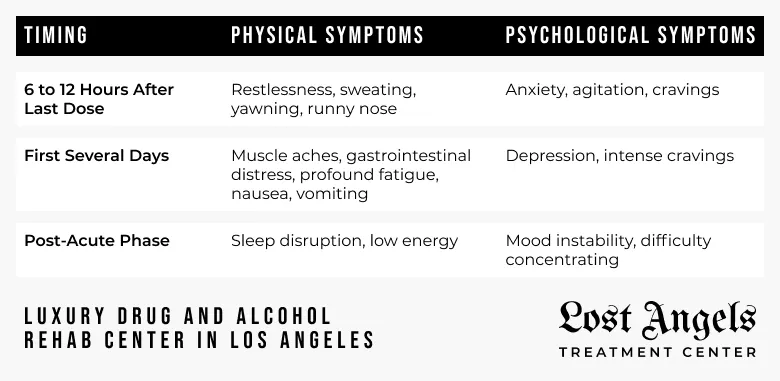
    Heroin withdrawal reflects the body’s attempt to rebalance after prolonged opioid dependence, as the brain’s reward and stress systems react sharply to the absence of the drug.

    Physical symptoms often include muscle aches, sweating, runny nose, gastrointestinal distress, and profound fatigue, while psychological symptoms may involve anxiety, agitation, depression, and intense cravings for heroin. Although heroin withdrawal is rarely life-threatening on its own, the combination of dehydration, insomnia, emotional instability, and relapse risk can make unsupervised withdrawal medically unsafe.

    Symptoms typically begin within 6 to 12 hours after the last dose of heroin, intensifying over the first several days as tolerance to the drug rapidly declines. Early withdrawal is often marked by restlessness, sweating, yawning, and anxiety, followed by more severe phases involving nausea, vomiting, muscle pain, and cravings that can feel overwhelming.

    For patients who have used heroin regularly or in high doses, the withdrawal syndrome may evolve into a prolonged post-acute withdrawal phase characterized by mood instability, sleep disruption, and difficulty concentrating.

    Heroin Withdrawal Symptoms

    The Foundations of Effective Addiction Treatment

    A comprehensive approach to addiction treatment is built on a sequence of carefully planned steps. Each stage addresses a different aspect of this multifaceted health issue, from the immediate physical crisis of withdrawal to the long-term work of psychological healing and relapse prevention.

    depressed-young-black-lady-crying-consultation-with-european-page

    1. Comprehensive Medical Assessment

    The first step in any effective treatment plan is a thorough assessment. We need to understand the full picture: a person’s medical history, the specifics of their substance use (what, how much, how long), and the presence of any co-occurring mental health disorders.

    This data-driven approach ensures that the treatment plan is tailored to the individual’s specific needs, rather than applying a one-size-fits-all model. It allows us to determine the appropriate level of care and anticipate potential challenges.

    2. Medically Supervised Detoxification

    For many substances, particularly alcohol, opioids, and benzodiazepines, stopping use leads to withdrawal—a physically and psychologically distressing process. Unmanaged withdrawal can be not only uncomfortable but also dangerous.

    Medically supervised detoxification provides 24/7 monitoring by a medical team in a safe environment. When appropriate, medications can be used to manage symptoms, reduce cravings, and prevent serious complications. 

    estetoscopio-y-prescripcion-en-computadora-portatil-page
    sad-ptsd-woman-patient-uttermost-therapy-mental-health-page (1)

    3. Integrated Treatment for Co-Occurring Disorders

    Data shows that substance use disorders and mental health conditions are frequently intertwined. Attempting to treat one without addressing the other is often ineffective.

    An integrated model, often called dual diagnosis treatment, addresses both issues simultaneously. Therapists and medical staff work together to create a unified plan that recognizes how depression might fuel drinking, or how anxiety might be linked to opioid use. This comprehensive approach is critical for preventing relapse and promoting lasting mental wellness.

    4. Evidence-Based Therapeutic Interventions

    Once a person is physically stable, the core of treatment involves evidence-based therapies. These are structured, goal-oriented modalities that have been studied and proven effective. They provide practical skills for managing thoughts, emotions, and behaviors.

    woman-with-pink-hair-enjoying-sun-wind-beach-page
    concept-love-with-no-limit-age-page

    5. Aftercare and Step-Down Planning

    A critical component of any treatment program is a detailed plan for what comes next. This may involve stepping down to a lower level of care, such as an intensive outpatient program (IOP) or a sober living environment. The goal is to gradually re-engage with daily life while maintaining a strong support structure, including ongoing therapy, peer support groups, and medical follow-up.

    Our Model at Lost Angels

    At Lost Angels, we have structured our program around fundamental principles. We provide a comprehensive, medically-grounded, and highly individualized approach to treating addiction and co-occurring mental health disorders in a private, distraction-free environment.

    A Continuum of Individualized Care

    Our small, six-bed capacity ensures that every individual receives focused, personal attention from our multidisciplinary team. Treatment is not a generic program; it is a plan designed specifically for you, based on a rigorous initial assessment. Our levels of care are designed to provide a seamless transition through the stages of early recovery:

    lost-angels-therapy-man-woman-holding-hands-page

    Wellness-Based Interventions in Opioid Recovery Care

    Holistic treatment plays a vital role alongside medical care for patients struggling with heroin use, particularly during the onset of withdrawal and the early path to recovery. While medications such as methadone, Suboxone, or clonidine help manage severe withdrawal symptoms and reduce physical dependence, holistic therapies address the stress, emotional strain, and bodily tension that heroin addiction may leave behind. This integrated approach helps stabilize the nervous system, supporting people as they move from heroin detox into longer-term treatment for heroin addiction.

    A typical day at Lost Angels includes daily group meetings, individual therapy sessions, and personal training, helping patients rebuild routine while managing symptoms of heroin withdrawal and lingering effects of heroin on the body. Physical practices such as yoga, boxing, personalized exercise routines, massage, acupuncture, and weekly chiropractic care help reduce withdrawal-related discomfort, improve circulation, and support the body as tolerance to the drug declines.

    therapist-working-with-her-group-session-page

    A Supportive and Healing Environment

    We believe that a person’s environment plays a significant role in their ability to heal. Our facility in Sherman Oaks is designed to be calm, private, and comfortable, removing external stressors so patients can focus entirely on their recovery. This setting allows patients to stabilize physically and emotionally after heroin detox, while creating a sense of safety that supports therapeutic engagement and reduces the pressure often associated with early treatment.

    Recovery also requires learning how to exist in the world without returning to patterns of drug use. For this reason, our program includes structured, sober community outings to the beach, restaurants, movies, and spas. These experiences allow patients to practice coping skills in real-world settings while remaining supported by staff and peers. 

    Learn More About Heroin Addiction Treatment Costs & Insurance Coverage

    We understand that concerns about cost can be a barrier to seeking help. That’s why our admissions team is here to provide clarity and assistance.

    We accept most PPO insurance plans and can work directly with your provider to verify your benefits. This process helps you understand what your policy is likely to cover before you make a commitment, allowing you to make an informed decision about your care.

    primer-plano-doctora-que-firma-informes-medicos-page
    lost-angels-modern-bedroom-wood-paneling-white-walls-page

    Adherence to the Highest Standards of Care

    Trust and safety are the cornerstones of effective treatment. Lost Angels is licensed by the California Department of Health Care Services (DHCS License #191512AP) and is accredited by The Joint Commission.

    These credentials represent our adherence to the highest national standards for safety, quality, and clinical ethics. Our practices are also independently verified through profiles with Psychology Today and the Better Business Bureau.

    We Help You Manage Heroin Abuse & Opioid Withdrawal at Lost Angels

    Addressing an issue as complex as addiction can feel overwhelming. The path forward may seem unclear, and it is normal to feel uncertain or afraid. But this is a challenge that can be met with the right tools and support. Our goal at Lost Angels is to provide a rational, compassionate, and effective framework to help you or your loved one navigate this process safely. It begins with a simple conversation to understand your situation and determine the most logical next step.

    driveway-2-page

    References

    Frequently Asked Questions

    What happens during medical detox?

    Medical detox involves 24/7 monitoring by a team of medical professionals who help you safely withdraw from substances. They manage symptoms like nausea, anxiety, and insomnia, often with the help of non-addictive medications. The goal is to keep you safe and as comfortable as possible while your body stabilizes.

    Dual diagnosis, or co-occurring disorders treatment, is an integrated approach that addresses both a substance use disorder and a mental health condition (like depression, anxiety, or PTSD) at the same time. This is considered the standard of care because these conditions often influence one another.

    The length of treatment is highly individualized and depends on factors like the severity of the addiction, the presence of co-occurring disorders, and individual progress. A program might start with a 30-day residential stay and then transition to outpatient care for several more months. The focus is on what is clinically effective, not on a predetermined timeline.

    Many PPO insurance plans provide coverage for medically necessary addiction treatment, including detox and residential care. Our team can contact your insurance provider on your behalf to verify your specific benefits and explain any potential out-of-pocket costs.

    Finishing residential treatment is a beginning, not an end. We work with each client to create a comprehensive aftercare plan. This often includes stepping down to an Intensive Outpatient Program (IOP), moving into a sober living home, and establishing connections with therapists and peer support groups in their community.

    Scroll to Top