
Cocaine Withdrawal Symptoms

Lost Angels

Key Topics in Cocaine Treatment
Cocaine withdrawal symptoms include intense stimulant withdrawal effects such as cravings for cocaine, anxiety, irritability, low mood, and sleep disruption, and symptoms may include fatigue and slowed movement after cocaine abuse or prolonged cocaine use.
Withdrawal can occur within hours after the last use of cocaine, symptoms generally peak in an acute phase lasting about 2 to 7 days, and withdrawal lasts into a subacute period over 1 to 4 weeks, with protracted withdrawal symptoms in some cases shaped by risk factors for cocaine and the amount of cocaine used.
Safe cocaine detox at Lost Angels in Los Angeles may include medical monitoring and a treatment program with substance abuse and mental health support, including treatment for co-occurring needs and continuing with treatment for lasting recovery.
-
AI OVERVIEW
Cocaine Addiction Treatment in Los Angeles
Dealing with cocaine withdrawal can feel overwhelming and isolating, but you are not alone in this challenging experience. Every individual’s path to recovery is unique, and identifying the signs of cocaine withdrawal is an important first step toward healing.
Lost Angels provides compassionate care designed to support you through cocaine withdrawal symptoms with dignity and clinical expertise. Our dedicated treatment team creates personalized recovery plans that address both the physical and psychological aspects of addiction, ensuring a holistic approach to your rehabilitation.

What Are the Signs and Symptoms of Cocaine Withdrawal?

Physical vs Psychological Effects
Cocaine withdrawal brings a mix of physical and psychological symptoms that can affect your day-to-day well-being in different ways, and for many, the psychological effects tend to be more prominent than the physical ones.
On the physical side, you might feel overwhelmingly tired, hungrier than usual, or notice trembling hands and slowed body movements and reactions, like it suddenly takes more effort to do even the simplest tasks. These reactions are your body’s way of adjusting after prolonged stimulant use.
Psychologically, the effects can be just as disruptive. It’s common to experience heightened anxiety, irritability, lingering sadness, or a deep sense of emotional flatness. Patients might find it hard to enjoy things that once brought pleasure or struggle to feel motivated, sometimes making it difficult to get out of bed or connect with others.
Effects of Cocaine Withdrawal Symptoms on Sleep
Sleep disturbances are common during cocaine withdrawal and can affect a patient’s ability to rest and recover. In the early days, people might find themselves sleeping far more than usual. This hypersomnia is your body’s way of trying to heal. Over time, though, sleep can become more fragmented.
Moreover, insomnia, frequent waking, and trouble falling back asleep often show up, especially if cravings or anxious thoughts are active. Many people also report vivid, sometimes distressing dreams about using cocaine. These dreams can feel unsettling and may add to emotional exhaustion or trigger cravings.


Mood Symptoms of Withdrawal from Cocaine
Anxiety and irritability often intensify in the first few days, sometimes accompanied by restlessness or agitation that makes it hard to settle. People tend to experience a deep emotional low, marked by anhedonia, the inability to feel joy or pleasure, which can last for several weeks.
For some, especially those with a history of depression, withdrawal may bring on suicidal thoughts.
What Are the Stages of Cocaine Withdrawal?
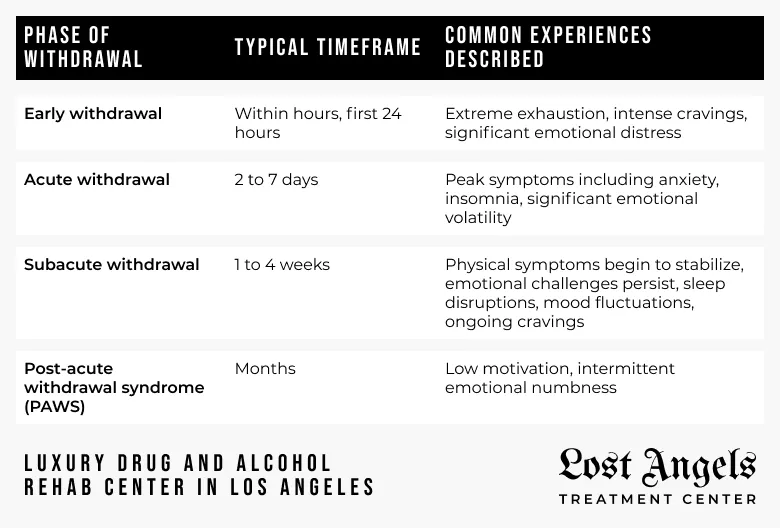
Cocaine withdrawal typically unfolds in phases that can begin within hours of the last use and continue for weeks or longer.
Many people move through an early crash and acute phase first, followed by subacute symptoms, and sometimes a longer post-acute period where motivation and mood can fluctuate.
The initial withdrawal period begins quickly after the last cocaine use, with symptoms emerging within hours. During the first 24 hours, individuals often experience extreme exhaustion, intense cravings, and significant emotional distress. Our team closely monitors patients through these critical early stages, providing medical supervision and personalized support.
The acute withdrawal phase typically spans 2 to 7 days, characterized by peak symptoms including anxiety, insomnia, and significant emotional volatility.
Subacute withdrawal can extend from 1 to 4 weeks, where physical symptoms begin to stabilize but emotional challenges persist. Patients may continue experiencing sleep disruptions, mood fluctuations, and ongoing cravings.
Furthermore, post-acute withdrawal syndrome (PAWS) can continue for months, potentially involving low motivation and intermittent emotional numbness.
Multiple factors influence withdrawal intensity, including duration and frequency of cocaine use, co-occurring mental health conditions, and potential polysubstance involvement. Individual differences in brain chemistry, stress levels, and access to consistent support can also shape how challenging withdrawal feels and how long symptoms last.
In some cases, cocaine may be adulterated with strong opioids such as fentanyl, which can complicate withdrawal by introducing unexpected opioid-related symptoms and risks.
What Are the Best Treatment Options for Safe Detox in Los Angeles?
Cocaine withdrawal can be complex and challenging, requiring careful medical supervision and personalized support. At Lost Angels, we offer comprehensive detox options designed to address the unique needs of patients struggling with cocaine addiction and withdrawal symptoms.

Evaluating Detox Treatment Approaches
Our expert medical team carefully assesses each individual’s specific withdrawal risks and treatment requirements. Inpatient medical detox becomes critical when patients have complex mental health concerns, a history of relapse, or multiple substance dependencies that require intensive monitoring and support.
Therefore, we provide a structured approach that considers your physical health, psychological needs, and personal recovery goals. Our small census allows for highly personalized care, ensuring each patient receives dedicated attention throughout the detox process.

Medical Monitoring During Cocaine Withdrawal
Professional medical supervision provides critical safety during cocaine withdrawal, with 24/7 monitoring of vital signs and immediate intervention capabilities. We use evidence-based protocols to manage potential complications and support patient comfort.
We screen for fentanyl exposure and put safeguards in place, including access to opioid focused medication support such as naloxone when clinically appropriate, to support a safer detox process.
The detox program also integrates holistic approaches like mindfulness and movement therapies to support the entire recovery journey.
Lost Angels Treatment Center Supports Cocaine Withdrawal & Recovery
Our therapeutic interventions are carefully designed to address the psychological aspects of cocaine withdrawal and addiction. Cognitive-behavioral therapy (CBT) helps patients unpack underlying thought patterns and emotional triggers that contribute to substance use. Motivational Interviewing creates space for personal exploration and commitment to change.
In addition, we utilize multiple evidence-based techniques to support recovery, including contingency management and targeted interventions that reinforce positive behavioral changes. These approaches help patients develop coping mechanisms, understand their unique triggers, and build resilience throughout the recovery process.
Even though there are no FDA-approved medications specifically treat cocaine withdrawal, our expert multidisciplinary team may use carefully selected off-label medications to manage specific symptoms. Antidepressants, non-benzodiazepine anxiolytics, and targeted sleep aids can help stabilize mood and support overall recovery.
Our continuous monitoring ensures that medication protocols are personalized and adjusted based on individual patient needs. We take a thoughtful, collaborative approach to symptom management, working closely with patients to determine the most appropriate interventions.
After detoxification, residential rehab offers a contained, clinically supported setting where recovery work can continue once withdrawal symptoms have stabilized. This phase focuses on addressing the psychological drivers of cocaine use that contributed to continued use. Living onsite also reduces exposure to triggers during a period when relapse risk often remains high.
In residential rehab, treatment extends beyond symptom management to include structured daily schedules, intensive therapy, and coordinated care for substance use and mental health needs. This level of care is often most appropriate for patients who need consistency, accountability, and uninterrupted focus to support early recovery.
Addressing cocaine addiction requires more than medical intervention, it demands a comprehensive approach to healing. Our program integrates holistic practices like yoga, mindfulness, meditation, and fitness to support overall wellness and emotional regulation.
We develop a relapse prevention plans that consider individual triggers, lifestyle factors, and long-term recovery goals. Ongoing counseling, peer support groups, and aftercare services help patients maintain momentum and build sustainable, healthy life patterns.
Many individuals struggling with cocaine addiction also experience co-occurring mental health conditions. Our dual diagnosis approach addresses substance use and mental health simultaneously, providing integrated treatment for conditions like anxiety, depression, and trauma.
By treating the whole person and understanding the complex interactions between mental health and addiction, we create a more comprehensive and compassionate path to recovery. Our goal is to support lasting healing and emotional stability.
Recovery is an ongoing journey that extends beyond initial treatment. The aftercare services we offer include continued therapy, regular check-ins, and connections to specialized support networks. We remain committed to supporting patients as they transition back to daily life and continue building their recovery.
Post-acute withdrawal syndrome (PAWS) is acknowledged and addressed through our comprehensive, patient-centered approach. We provide the tools, support, and guidance needed to navigate the challenges of long-term recovery.
Cocaine Withdrawal Treatment Costs and Insurance at Lost Angels
Lost Angels Treatment Center recognizes that understanding treatment costs can feel complex and overwhelming. Hence, our team is always looking to help patients verify insurance benefits and explore accessible treatment options for cocaine withdrawal.

Insurance Coverage Fundamentals
Most insurance plans offer behavioral health benefits that cover substance use treatment under parity laws. These benefits typically include inpatient detox programs, outpatient therapy, and psychiatric services designed to support comprehensive recovery.
Our admissions specialists are trained to help patients navigate complex insurance landscapes. We work directly with most PPO insurance plans to verify benefits, explain coverage details, and minimize financial barriers to essential treatment.

Treatment Cost Considerations
Treatment costs vary based on specific care needs, including program setting, duration, and required services. Inpatient programs generally cost more due to 24/7 medical supervision and comprehensive support during withdrawal.
We offer flexible financial approaches to make treatment accessible, including benefit verification and personalized payment strategies. Our goal is to help patients focus on recovery without additional financial stress.

Regulatory Compliance and Clinical Standards at Lost Angels
Lost Angels operates under licensed and accredited standards designed to protect patient safety and ensure consistent clinical quality.
The centre is licensed by the California Department of Health Care Services in California (license and registration number 191512AP) and is Joint Commission accredited, reflecting formal oversight and adherence to established requirements for safety, quality of care, and clinical operations.
Lost Angels also maintains verified profiles with Psychology Today and the Better Business Bureau, offering additional third-party reference points for patients and families seeking transparency and accountability when choosing care.
Lost Angels Can Help You Find Healing For Cocaine Withdrawal Symptoms
Our compassionate team at Lost Angels understands the complex challenges of recovery and is committed to supporting you through every stage of healing. We’re dedicated to creating a personalized treatment approach that addresses your specific cocaine withdrawal symptoms with care, expertise, and genuine understanding.
Reaching out is a courageous act, and we’re ready to listen, support, and help you move forward with compassion and confidence.

References
- MedlinePlus – Cocaine withdrawal
- CDC – Reversing Opioid Overdoses With Lifesaving Naloxone
- Psychology Today – Lost Angels Treatment Center Profile
- Better Business Bureau – Lost Angels Profile
Alcohol Intervention FAQs
Can cocaine withdrawal be dangerous?
Cocaine withdrawal can be dangerous, particularly when severe depression, suicidal thoughts, or psychotic symptoms occur. Medical supervision ensures safety during this process.
Is it safe to withdraw from cocaine at home?
Home withdrawal may be possible for those with mild symptoms and strong support, but professional care is recommended for individuals with mental health issues or polysubstance use. Lost Angels can provide the necessary support during this time.
Are medications used to help manage cocaine withdrawal symptoms?
No FDA-approved medications exist for cocaine withdrawal, but doctors may prescribe off-label medications to manage specific symptoms like anxiety or insomnia.
Do inpatient detox programs offer better outcomes for cocaine withdrawal?
Inpatient detox programs provide intensive support and 24/7 monitoring, which can lead to better outcomes for individuals with complex needs or high relapse risk.
What should I expect during the first week of cocaine withdrawal treatment?
During the first week of treatment, expect to manage fatigue, irritability, insomnia, and cravings with medical and psychological support to ensure safety and stability.
Does insurance cover treatment for cocaine withdrawal symptoms?
Many insurance plans cover cocaine withdrawal treatment, including detox and therapy services, but coverage varies by plan and provider.
What treatments help relieve cocaine withdrawal symptoms?
Treatments for cocaine withdrawal include psychotherapy, symptom-based medications, and contingency management strategies to ease discomfort and prevent relapse.
Is inpatient or outpatient treatment better for cocaine withdrawal?
The choice between inpatient or outpatient treatment depends on individual needs, with inpatient care being more suitable for those with severe symptoms or unsafe home environments.