
Benzodiazepine Withdrawal Symptoms

Lost Angels

Key Topics in Benzodiazepine Treatment
Benzodiazepine withdrawal syndrome involves a range of physical and psychological symptoms that occur when use is reduced or stopped. The timeline and intensity are influenced by the specific medication, dosage, and duration of use.
Abruptly stopping, especially after long-term or high-dose use, increases the risk of severe complications such as seizures and delirium, which require immediate medical attention. A medically supervised taper is the recommended approach for safety.
An effective withdrawal management plan includes a comprehensive clinical assessment, a gradual and individualized taper schedule, integrated care for any co-occurring mental health conditions, and evidence-based psychotherapies to build coping skills.
Lost Angels in Los Angeles provides medically supervised detoxification and residential treatment in a private, six-person setting, offering a structured environment for stabilization and long-term recovery planning.
-
AI OVERVIEW
When you are dealing with the effects of benzodiazepine withdrawal, the world can feel unsteady and overwhelming. The physical discomfort, anxiety, and insomnia are challenging on their own, and the uncertainty about what to expect can make it difficult to see a clear path forward. This is a common and understandable experience for many people facing this challenge.
At Lost Angels, we approach this problem with a calm, methodical, and medically grounded framework. In our private residential setting in Los Angeles, we provide a structured environment where your safety is the first priority. Our small, focused medical team works with you to develop an individualized plan, helping you stabilize and build a foundation for lasting recovery with dignity and respect.


Understanding Benzodiazepine Withdrawal Syndrome
Benzodiazepine withdrawal syndrome is a predictable, neurobiological response that occurs when a person who has developed a physical dependence reduces their dose or stops taking the medication. These medications work by enhancing the effect of a neurotransmitter called gamma-aminobutyric acid (GABA), which has a calming effect on the brain.
Over time, the brain adapts to the presence of the medication and reduces its own GABA production. When the medication is removed, the central nervous system can become hyperexcitable, leading to a spectrum of withdrawal symptoms.
What Are the Phases and Symptoms of Benzodiazepine Withdrawal?
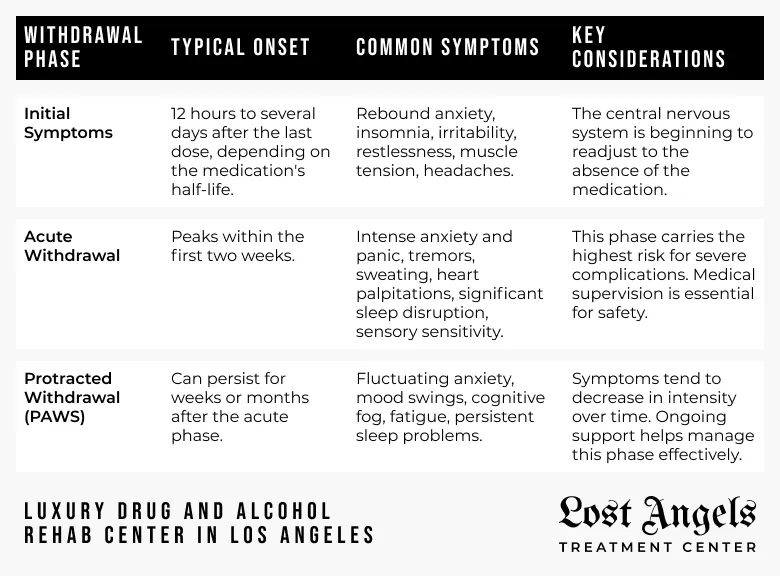
The withdrawal timeline varies from person to person, but it generally follows a pattern of distinct phases. The specific benzodiazepine used, whether it has a short half-life (like alprazolam) or a long half-life (like diazepam), is a key factor in when symptoms begin and how long they last.

Initial Symptoms Emerge as the Medication Leaves the System
For short-acting benzodiazepines, the first signs of withdrawal can appear within 12 to 24 hours. For longer-acting versions, it may take several days. This initial phase often involves a rebound of the symptoms the medication was originally prescribed to treat, such as heightened anxiety, restlessness, and insomnia.

Acute Withdrawal Is Often the Most Intense Period
Lasting from a few days to several weeks, the acute phase is typically when withdrawal symptoms peak. During this time, both physical and psychological effects can be significant. This is the period where medical monitoring is most critical to ensure safety and manage discomfort.

Protracted Withdrawal Can Involve Lingering Symptoms
After the acute phase, some individuals may experience post-acute withdrawal syndrome (PAWS), where less intense but persistent symptoms can linger for weeks or months. These may include fluctuating anxiety, mood instability, sleep difficulties, and cognitive issues like poor concentration. This is a normal part of the brain’s long-term healing process.
When Does Abrupt Benzodiazepine Discontinuation Become Dangerous?
Stopping benzodiazepines suddenly, without medical guidance, can be dangerous. The primary risk is the development of a severe withdrawal syndrome, which can include life-threatening complications.
This risk is highest for patients who have been taking high doses for a prolonged period, but it can occur in many different situations. The most serious symptoms, which constitute a medical emergency, include generalized seizures, delirium (severe confusion and disorientation), and hallucinations. These risks are why a professionally managed, gradual taper is the standard of care.

How Does a Structured Program Manage Benzodiazepine Withdrawal?
A safe and effective withdrawal plan is systematic and tailored to the patient. The goal is to allow the nervous system to gradually readjust while minimizing severe symptoms and ensuring the patient is supported both physically and psychologically.
Treatment begins with a detailed clinical assessment to understand your medical history, the specifics of your benzodiazepine use, and any co-occurring mental health or medical conditions. Throughout the process, our team uses objective tools and continuous monitoring of vital signs to track your progress and make real-time adjustments to your care plan, ensuring your comfort and safety.
Instead of abrupt cessation, we implement a gradual tapering schedule. For those on a short-acting benzodiazepine, this may involve a carefully managed switch to a longer-acting agent like diazepam. This strategy provides more stable blood levels of the medication, which helps smooth out the withdrawal process and reduce the intensity of rebound symptoms. The taper rate is individualized and adjusted based on your response.
It is common for benzodiazepine dependence to coexist with other challenges, such as anxiety disorders, depression, trauma, or the use of other substances like alcohol. Attempting to manage withdrawal without addressing these underlying issues is often ineffective. As a dual diagnosis treatment center, we provide integrated care that addresses your mental health and substance use needs simultaneously, which is critical for a stable recovery.
While the taper is the primary strategy, our medical team may use non-addictive adjunctive medications to help manage specific withdrawal symptoms. For example, certain medications can help reduce anxiety, manage muscle stiffness, or improve sleep without creating a new dependence. Any medication is prescribed thoughtfully as part of a comprehensive plan.
Levels of Care for Benzodiazepine Withdrawal at Lost Angels

Medically Supervised Detoxification
For benzodiazepine withdrawal, inpatient detoxification is the safest starting point. It provides 24/7 medical supervision in a controlled environment, which is essential for managing the acute phase and responding immediately to any complications. Our detox program focuses on stabilization, comfort, and preparing you for the next stage of treatment.

Residential Treatment
Following detox, residential treatment offers a structured and supportive environment to continue the stabilization process. In our six-person facility, you receive a high degree of individualized attention from our medical team. This phase focuses on deeper therapeutic work to address the root causes of dependence while your brain and body continue to heal.

Intensive Outpatient (IOP) and Aftercare
For those who are stable and have a supportive home environment, an intensive outpatient program (IOP) allows you to continue receiving structured therapy while resuming daily responsibilities. After any level of care, we develop a robust aftercare plan. This may include ongoing therapy, participation in support groups, and connections to community resources to support your long-term recovery.

Evidence-Based Therapies for Building Recovery Skills
Managing withdrawal is the first step. Building the skills for long-term recovery is what comes next. We use a range of evidence-based therapies to help you understand the patterns that led to dependence and develop new ways of coping.

Cognitive Behavioral Therapy (CBT)
CBT helps you identify and change the unhelpful thinking patterns and behaviors that contribute to anxiety and substance use. In the context of benzodiazepine withdrawal, it is particularly useful for learning to manage the fear of symptoms like panic or insomnia, breaking the cycle of anxiety that can lead to relapse.

Dialectical Behavior Therapy (DBT)
DBT is designed to help people who experience intense emotions. It teaches practical skills in four key areas: mindfulness, distress tolerance, emotion regulation, and interpersonal effectiveness. These skills are invaluable for navigating the emotional ups and downs of withdrawal and early recovery without turning to a substance.

Eye Movement Desensitization and Reprocessing (EMDR)
For many people, benzodiazepine use began as a way to cope with trauma. EMDR is a structured therapy that helps the brain process traumatic memories that are “stuck.” By reducing the distress associated with these memories, EMDR can address one of the root drivers of substance use.

Motivational Interviewing
This collaborative therapeutic style helps you explore and resolve ambivalence about change. Rather than telling you what to do, your therapist works with you to strengthen your own motivation and commitment to your recovery goals, empowering you to take ownership of your path forward.

Brainspotting
Brainspotting is a powerful, focused treatment method that works by identifying, processing, and releasing core neurophysiological sources of emotional and physical pain, trauma, and a variety of other challenging symptoms. It uses your field of vision to access the brain’s self-healing capacities, making it particularly effective for issues that are difficult to address with talk therapy alone.
Verified Standards of Care and Credentials
Choosing a treatment provider is a significant decision. Lost Angels operates with transparency and adherence to the highest standards of care.
We are licensed by the California Department of Health Care Services (DHCS) as a residential treatment facility (License #191512AP) and are accredited by The Joint Commission, the nation’s leading healthcare standards-setting organization. Our credentials are also verified through profiles with Psychology Today and the Better Business Bureau.


Personalized Benzodiazepine Addiction Treatment at Lost Angels
The challenge you are facing is a recognized medical condition, and there are structured, evidence-based ways to move through it safely.
At Lost Angels, our approach is methodical, compassionate, and centered on your individual needs. We offer a quiet, private space to stabilize, with a dedicated team focused on your well-being.
If you are ready to consider a different path, we are here to provide clear information and steady support to help you take the next step.
References
- Biomolecules Journal – Benzodiazepine Modulation of GABAA Receptors: A Mechanistic Perspective
- The Alliance for Benzodiazepine Best Practices – Comparison of Benzodiazepine Pharmacology
- UTHealth Houston – Post-Acute Withdrawal Syndrome
- Psychology Today – Lost Angels Treatment Center Profile
- Better Business Bureau – Lost Angels Profile
Frequently Asked Questions
What are the most common benzodiazepine withdrawal symptoms?
Common symptoms include increased anxiety, insomnia, irritability, restlessness, sweating, and muscle pain. The intensity can range from mild to severe.
How long do benzodiazepine withdrawal symptoms typically last?
The acute phase of withdrawal usually peaks within the first two weeks. However, some less intense, lingering symptoms (protracted withdrawal) can last for several weeks or months as the brain continues to heal.
What treatment options are available for benzodiazepine withdrawal?
The standard of care is a gradual, medically supervised taper. This is often supported by adjunctive medications to ease symptoms and evidence-based therapies like CBT and DBT to build coping skills.
Can benzodiazepine withdrawal be dangerous?
Yes, abrupt cessation can be dangerous, potentially leading to severe complications like seizures or delirium. Medical supervision is strongly recommended to manage these risks.
Do benzodiazepine withdrawal treatment programs address co-occurring mental health disorders?
Yes. High-quality programs provide integrated, dual diagnosis treatment to address co-occurring conditions like anxiety, depression, or PTSD at the same time as the substance use disorder.
Does insurance cover benzodiazepine withdrawal treatment?
Many private PPO insurance plans provide coverage for medically necessary detoxification and residential treatment. Our team can help you verify your benefits to understand your options.