


We also prioritize patient privacy with discreet, confidential care practices designed to protect your personal information and your experience throughout treatment. This approach allows you to detox from benzos safely while addressing underlying mental health needs.
Benzodiazepine Detox in Los Angeles
Home
Benzodiazepine Detox in Los Angeles
Key Topics in Benzodiazepine Treatment
Benzodiazepine detox in Los Angeles is a medically supervised process designed to reduce withdrawal risks and support stabilization for people with benzodiazepine dependence or benzo addiction. Lost Angels provides individualized medical detox with 24/7 monitoring, personalized tapering protocols, and integrated support for co-occurring mental health needs in a private, confidential setting. This detox phase is typically the first step before ongoing addiction treatment and drug rehab options such as residential care or outpatient programs in Los Angeles County.
-
AI OVERVIEW
Benzodiazepine Addiction Treatment in Los Angeles
If you or a loved one is currently navigating the challenges of benzodiazepine dependence, taking the first step toward recovery can feel overwhelming. Nevertheless, you’re not alone, many individuals and families in Los Angeles face similar struggles, and compassionate, informed support is available.
At Lost Angels, a structured and individualized approach to benzodiazepine detox in Los Angeles ensures patients receive consistent medical oversight in a private, supportive environment. The care team works closely with each person to guide them safely through the withdrawal process and into sustained recovery.

What Are Benzodiazepines and How Common Are They in the US?
Benzodiazepines (often called benzos) are prescription drug sedative medications that enhance the effect of the neurotransmitter GABA at the GABA-A receptor, which is one reason they can rapidly reduce anxiety, promote sleep, and stop seizures. These drugs can also produce tolerance and benzodiazepine dependence with repeated use because the brain adapts to sustained GABAergic signalling.
In a large US analysis of 2015 to 2016 data, about 12.5% to 12.6% of adults reported past-year benzodiazepine use, with roughly 10.4% using as prescribed and about 2.1% to 2.2% reporting misuse, and a smaller fraction meeting criteria for a benzodiazepine use disorder. Put differently, millions of adults used a prescription drug in this class in a single year, which helps explain why benzodiazepine addiction treatment and benzo detox services are common needs across the country.
Longer-term trends also show expanded exposure, with the percentage of US adults filling a benzodiazepine prescription rising from 4.1% in 1996 to 5.6% in 2013, alongside increases in the overall quantity dispensed. From a public health perspective, higher population exposure increases the absolute number of people who may experience benzo withdrawal symptoms and need drug detox or addiction recovery support.
Signs of Benzodiazepine Addiction
A common early sign of benzo addiction is tolerance, meaning the same dose no longer produces the same effect, followed by dose escalation or taking benzos closer together than prescribed. Another sign is using a prescription drug for reasons outside the original indication, such as taking benzos to blunt stress, improve mood, or “get through” the day rather than treating the targeted symptom.
Loss of control often shows up as repeated failed attempts to cut down, running out early, or taking “extra” doses during predictable stressors despite intending not to. Many people also notice increasing salience, meaning benzos start to occupy more mental space through preoccupation, planning around supply, or anxiety about being without them, which is a common theme in the complexities of benzodiazepine addiction.
A more specific pattern is interdose withdrawal, where benzo withdrawal symptoms return between scheduled doses, especially with short-acting, high-potency agents, and the person takes another dose primarily to stop symptoms rather than to feel better than baseline.


When to Seek Help for Benzodiazepine Addiction
Seek a clinical assessment if you are struggling with benzodiazepine addiction signs, such as being unable to follow the prescribed plan, needing higher doses to get the same relief, or using benzos mainly to stop withdrawal during detox rather than the original condition. This is especially important if you have tried tapering and symptoms became unmanageable, because repeated failed tapers can reinforce fear-driven use and make benzo detox more medically complex.
Urgent help is warranted if you experience severe benzodiazepine withdrawal symptoms such as confusion, hallucinations, seizures, suicidal thoughts, or marked changes in heart rate or blood pressure, since detox alone can be dangerous without medical professionals. If benzos are used alongside alcohol or opioids, the risk profile changes substantially, and a medical team can safely coordinate benzo detox programs, detox and treatment decisions, and dual diagnosis treatment when needed.
Risk Factors for Benzodiazepine Addiction
Pharmacology matters, and higher risk profiles are associated with rapid onset, high potency, and short half-life agents because they can intensify reinforcement cycles and rebound symptoms that drive benzo detox needs. Reinforcement is a learning mechanism, and with benzos it is often negative reinforcement, meaning the drug is taken to remove distress, which can quietly strengthen habit loops over time and lead to benzodiazepine dependence.
Clinical context matters too, including long duration of use, higher total daily dose, prior substance use disorder history, or untreated anxiety, panic, PTSD, or chronic insomnia, all of which can increase the likelihood of needing benzodiazepine addiction treatment. Iatrogenic dependence can occur, meaning dependence that develops from medically directed use, and it can shift toward benzo addiction treatment when use becomes compulsive, harmful, or difficult to control, even if it began appropriately.
Environmental and behavioral factors also contribute, including high stress, trauma exposure, social isolation, irregular sleep schedules, and limited access to non-medication supports, which can raise the risk of addiction in Los Angeles and elsewhere.


How Does A Medical Detox Program In Los Angeles Manage Benzodiazepine Withdrawal Symptoms?
A professional medical detox program manages benzodiazepine withdrawal by providing 24/7 medical monitoring and a personalized care plan to ensure your safety and comfort. At Lost Angels, our approach creates a stable foundation for addressing the underlying causes of benzodiazepine dependence, including co-occurring mental health conditions. This process is the first step in a comprehensive addiction treatment plan designed for long-term recovery.
The type of benzodiazepine you have been prescribed, such as a short-acting benzo like Xanax or a long-acting one like Valium, significantly influences the detox process. Withdrawal from short-acting medications may begin more quickly and feel more intense, while symptoms from long-acting drugs can have a more gradual onset. Our expert medical team considers these differences when developing your individualized treatment plan.
A thorough assessment allows us to understand the specific medication, dosage, and duration of use. This information is essential for creating a safe and gradual tapering schedule. The goal of this personalized approach is to minimize discomfort and reduce the potential risks associated with benzodiazepine withdrawal.
Withdrawal from benzodiazepines can involve a range of distressing physical and psychological symptoms, including heightened anxiety, insomnia, agitation, and muscle spasms. These symptoms of benzodiazepine withdrawal can feel overwhelming, especially when you are also navigating complex emotional states.
Stopping benzodiazepines abruptly can lead to severe complications, such as psychosis or seizures, which is why medical supervision is critical. Our inpatient detox services include 24/7 monitoring of your vitals by our clinical staff in a secure and comfortable environment. When medically appropriate, we may use Medication-Assisted Treatment (MAT) to further ease withdrawal symptoms and ensure your stability before you transition into our residential rehab program.
What Makes Our Benzodiazepine Detox Program Safe For Addiction Treatment?
A safe and effective benzodiazepine detox program provides continuous medical supervision, personalized tapering plans, and compassionate support to manage withdrawal symptoms. The program at Lost Angels provides a structured environment where your well-being is the central focus, ensuring a stable foundation for recovery from benzodiazepine dependence.


Licensed and Accredited for High Standards of Care
Choosing a licensed and accredited rehab center is essential for ensuring your safety and receiving quality care. Our treatment center is fully licensed by the California Department of Health Care Services (license/registration number 191512AP) to provide all levels of care, including medically supervised detox. We are also accredited by The Joint Commission, which signifies our commitment to the highest national standards for safety and clinical excellence.
Moreover, Lost Angels also maintains a verified Psychology Today profile and a Better Business Bureau business profile, which provide additional third-party reference points for prospective patients and families.
These credentials reflect our dedication to evidence-based practices and ethical treatment. They serve as an assurance that our program operates with accountability and a firm commitment to patient well-being.
How Do You Choose The Right Level of Care For Drug Detox
Choosing the right program depends on your medical history, the specifics of your benzodiazepine use, and any co-occurring needs. At Lost Angels, our initial assessment process is designed to identify the safest and most supportive level of care for your situation. This ensures the detox process is managed with clinical precision from the very beginning.

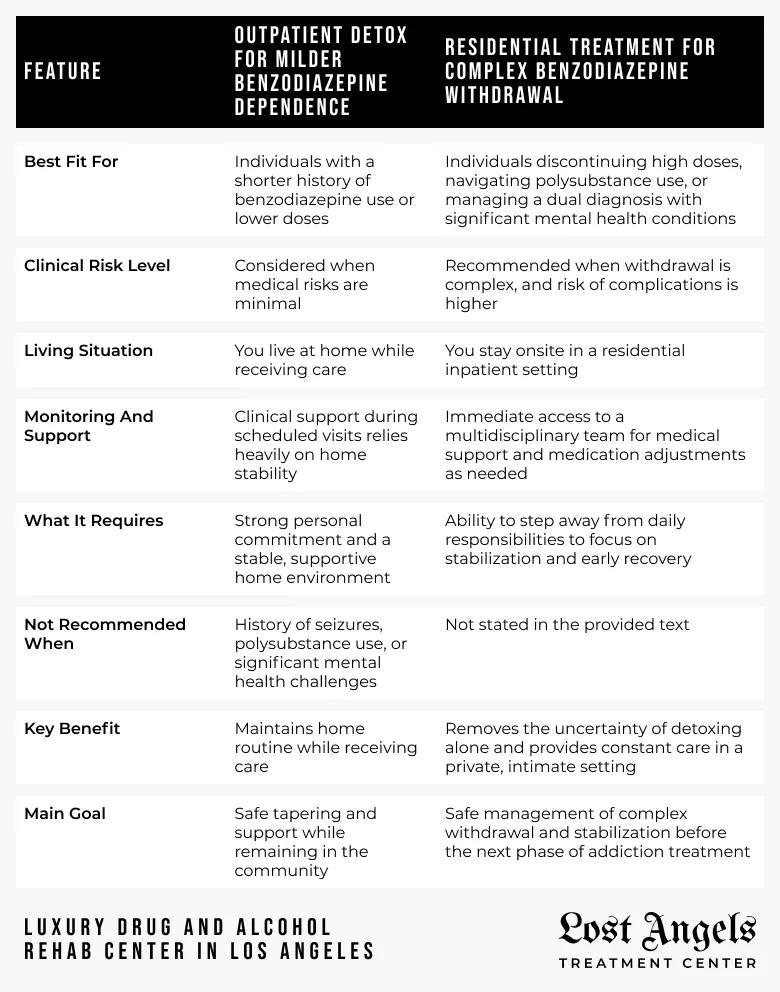
Outpatient Detox for Milder Benzodiazepine Dependence
An outpatient detox program may be medically appropriate for individuals with a shorter history of benzodiazepine use or those taking lower doses. This option is considered when medical risks are minimal, and you have a stable, supportive home environment.
This modality allows you to live at home while receiving care, but it requires a strong personal commitment and support system. Outpatient detox is generally not recommended for those with a history of seizures, polysubstance use, or significant mental health challenges.

Residential Treatment for Complex Benzodiazepine Withdrawal
Residential inpatient care is the recommended treatment option for managing complex benzodiazepine withdrawal symptoms. This is especially true when discontinuing high doses, navigating polysubstance use, or addressing a dual diagnosis with significant mental health conditions.
In our private, intimate setting, you have immediate access to our multidisciplinary team for medical support and medication adjustments as needed. This constant care removes the uncertainty of detoxing alone and provides a stable foundation for healing. Here, you can rest and begin the recovery process with confidence as you prepare for the next phase of addiction treatment.
How Long Does The Benzodiazepine Detox Process Take?
Your Detox Timeline Is Based On Individual Factors
Benzodiazepine detox timelines vary widely, and the safest pace depends on how your body responds as dose reductions begin. In general, withdrawal symptoms may start within hours to a few days after a reduction or last dose, then peak during an acute phase that often lasts days to a couple of weeks, followed by a stabilization period where symptoms can gradually ease but may linger.
Several key factors influence the length and intensity of the benzo withdrawal timeline:

Specific benzodiazepine used

Half-life (how long it stays active in the body)

Daily dose

Duration of use

Age and metabolic response

Liver function

Sleep stability

Baseline anxiety sensitivity

Co-occurring health disorders
Detox Progresses Through Distinct Recovery Phases
Early withdrawal can begin within hours to a few days after the last dose or a meaningful reduction, often showing rebound anxiety, sleep disruption, tremor, sweating, and sensory sensitivity. This period matters medically because higher-risk cases can escalate to confusion, hallucinations, or seizures, which is why medical monitoring is often emphasized.
The acute phase is typically the most functionally disruptive window, often lasting about one to two weeks for many people, though it can extend depending on dose history and taper speed. Symptoms can come in waves, including agitation, panic, cognitive fog, and insomnia, reflecting an unstable balance between inhibitory and excitatory signalling as the brain adapts.
After acute symptoms settle, a stabilization phase may follow where residual anxiety, insomnia, low mood, and concentration issues persist while stress regulation and sleep architecture normalize. Some people also experience post-acute withdrawal syndrome (PAWS), where intermittent symptoms like mood swings, sleep disturbance, and cognitive slowing recur for weeks or months rather than improving in a straight line.

We Clarify Your Payment and Insurance Options
At Lost Angels, we accept most PPO insurance plans and can help you understand your coverage for a benzodiazepine detox program in Los Angeles. Our admissions coordinators will conduct a complimentary benefits verification to explain your policy’s provisions for detox and addiction treatment.
For those who prefer not to use insurance or are seeking alternative options, we offer private payment plans. Our goal is to ensure you have a clear and complete understanding of the investment in your care. We will walk you through all available options so you can make an informed decision with confidence.
Transitioning from Detox to Comprehensive Rehab
Detox addresses physical dependence, but lasting recovery requires treating the underlying causes of addiction. Following stabilization, patients transition into our residential treatment program to address the psychological and behavioral aspects of benzodiazepine abuse. Our dual diagnosis approach is essential for individuals also managing conditions like anxiety or depression, ensuring integrated care for both addiction and mental health.
Our rehab program integrates individual and group therapy using modalities such as CBT, DBT, and EMDR to build coping skills and relapse-prevention strategies. This medical work is complemented by holistic therapies, including yoga, mindfulness, and fitness, to support overall well-being. The goal is to equip you with the tools needed to overcome benzodiazepine addiction and move forward with confidence.


Let Lost Angels Guide You Through Your Healing Journey, We Can Help You
We believe that true recovery starts with dignity, understanding, and hope. Whether you’re considering inpatient or outpatient care, our focus is on creating a plan that fits your unique needs and supports your long-term well-being.
If you’re looking for benzodiazepine detox in Los Angeles, we’re here to help you start treatment with confidence, surrounded by professionals who truly care. Reach out today, we’re ready to listen, support you, and guide you toward a healthier tomorrow.
References
- Journal of Psychiatric Services – Benzodiazepine Use and Misuse Among Adults in the United States
- American Journal of Public Health – Increasing Benzodiazepine Prescriptions and Overdose Mortality in the United States, 1996–2013
- Psychology Today – Lost Angels Treatment Center Profile
- Better Business Bureau – Lost Angels Profile
Frequently Asked Questions
How long does benzodiazepine detox take in Los Angeles?
Benzodiazepine detox typically lasts between 7 and 14 days, though some individuals may require a longer, medically supervised taper. The duration depends on factors like usage history and overall health.
Does insurance cover benzodiazepine detox in Los Angeles?
Most private insurance plans cover medically necessary detox services, including benzodiazepine withdrawal treatment. Lost Angels can help verify your specific benefits.
What should I expect during benzodiazepine detox in Los Angeles?
Expect round-the-clock medical care in a structured setting with individualized tapering plans to manage withdrawal symptoms safely.
What are the safest ways to detox from benzodiazepines?
The safest way to detox from benzodiazepines is under medical supervision with a carefully managed tapering process to minimize risks.
Can I detox from benzodiazepines at home or is inpatient care necessary in Los Angeles?
Detoxing at home can be risky due to potential severe withdrawal symptoms. Inpatient care is often recommended for safety and support.
Who is eligible for an outpatient benzodiazepine detox program in Los Angeles?
Outpatient detox may be suitable for those with mild dependence, no serious health conditions, and strong home support. A clinical assessment determines eligibility.